

See if this scenario sounds familiar.
A small handful of angry detractors mount a "whisper campaign" against a recently installed pastor. For a year the congregation and the pastor engage in a process designed to bring healing and resolution to the situation.
Historically, Presbyterians value higher education. In the best traditions of our Reformed faith, this commitment is always being challenged, examined and restated. Prospective students and their parents, along with professors, alumni/ae and governing bodies frequently ask, "What does it mean for a college to be related by covenant to the Presbyterian Church?" The question deserves a thoughtful response.
He and I hold so much in common. How can we see things so differently? We are both pastora of vital PC(USA) churches. We both proclaim the gospel with passion. We both serve boards of renewal organizations. Yet whenever news breaks in the denomination, he seems to see it as a harbinger of doom, whereas I often see the hand of the Holy Spirit. Time and again, in board meetings we argue against one another and vote in opposition to each other.
In the Presbyterian Church (U.S.A.) we are short on members but still have substantial funds for mission. Churches in the "Two-Third’s World" have greater and greater numbers of people but are short on funds for ministry. How can we best become partners in mission? Surely some special "theological education" is required.
Short-term mission trips are a popular form of ministry that bring different parts of the body of Christ together.
Recently a religious fortnightly heralded a certain conservative school’s organized deployment of its best M.A. graduates into prestigious philosophy programs nationally and internationally. From there, earned doctorates in hand, these same students are assisted into the academy becoming leaders in the current revival of metaphysics, philosophy of religion, business ethics and philosophical theology.
Deep in the South Georgia forests, perched up on the fender of a Ford tractor at eight years of age, I was surprised when Henry slammed it to a halt. Moving carefully, he took his single-shot .22 rifle from where it had been stowed behind his seat and fired a bullet through the brain of the largest rattlesnake that I had ever seen. We carried the dead snake with us back to the house, where Henry, the plantation superintendent, proceeded to skin it and cut off its rattles for all to see.
Let me begin with an act of memory.
I remember — I’ve not just read about, but I remember — a time in the life of the American mainline church when there was a vital understanding of, and deep confidence in, the language of vocation. I can actually diagram the way in which, at various junctures, this language got spoken in practical ways, to the end that a whole churchly ecosystem participated in the discernment and encouragement of my own sense of vocation.
For a number of years in the 1960s my missionary father-in-law sponsored a small program for theological students of Haile Selassie University in Addis Ababa. His primary purpose was to provide room and board for 30 young men who had no money and no scholarship support for the summer months. The secondary purpose was to provide instruction in Bible and theology. The tertiary purpose was to provide American Presbyterians with an unpaid Christian evangelistic opportunity overseas.
Everyone, even those least familiar with medicine, knows that, in most cases, treating symptoms is a vain pursuit if the actual disease is ignored. No amount of Tylenol will conquer a serious bacterial infection; it will only give temporary relief for the suffering associated with it. Ignore the disease long enough, and death, even from some minor infections, is possible.
When word came to me that Robert Bullock was retiring as The Outlook’s editor, I realized that I had been the beneficiary of the skills of four Outlook editors who gave their lives to a ministry of writing. I speak of Aubrey Brown, George Laird Hunt, and the present retiring incumbent who is storing away his sharp pen and bold blue pencil in order to move on to other things. I mention with reverence the quiet and commanding figure of Ernest Trice Thompson, who was my teacher, and whose influence gave The Outlook its particular sheen.
I want to express my personal appreciation for Jennifer Files’ attention to the Presbyterian Foundation, a unique and important entity of the Presbyterian Church (U.S.A.) . As a current member of the board of trustees of the foundation, I add the following comments.
As members of the church, we have been and are being greatly blessed by the foundation. For more than 200 years, Presbyterians have entrusted gifts, in large and small amounts, to the foundation's care and management.
Upon my departure in April, 1999, after six years as President and CEO of the Foundation, I made a commitment to myself to continue to love the Presbyterian Church and the foundation — and to keep my mouth shut! Like many, I had seen the examples of hangers-on who, after leaving full-time involvement in an organization, continued to make their "contribution" by meddling, without responsibility or accountability for the performance, or even for what they said.
As disputes in our denomination are wending their way through the judicial system, there are frequent expressions of confidence in the "independent judiciary" to resolve the disputes in progress and to help us escape some of our most pressing difficulties. It would appear that this notion has its origin in the system of governments in the United States, where there is a "separation of powers."
Outlook National Reporter Leslie Scanlon wrote an interesting and informative report on giving to affinity groups in a recent issue of The Outlook: "Conservative groups receive more money; large donors' identities are still kept secret." The article itself was well researched and carefully worded, providing helpful information.
Dear members of the Theological Task Force on Peace, Unity and Purity of the Church:
I write this open letter to you to suggest — maybe even plead — that you refrain from using your newly won, and ill-conceived, authority to meet privately.
No good will come of it.
Conservative Presbyterian special interest groups tend to have deeper pockets than liberal ones — although who’s giving the money often isn’t being revealed.
This year, for the first time, groups that wanted to rent display space in the Exhibit Hall at the General Assembly of the Presbyterian Church (U.S.A.), held May 24-31 in Denver, were required by the Assembly to submit financial disclosure forms — Internal Revenue Service Form 990s, which the federal government requires nonprofit groups with incomes over certain thresholds to file.
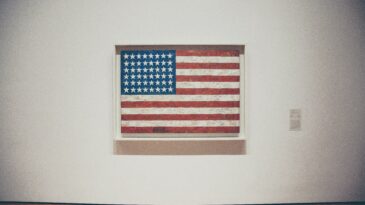
I rise to speak to you this morning as an elder of the church but not for any other elder or the session. I speak as an individual, a Christian, and a Presbyterian in a faith tradition going back thousands of years. I speak because, at the beginning of the service this morning, a member of our congregation, without permission, carried the United States flag down the aisle and placed it beside the altar.
Note - The following sermon was sent by Denton as a response to the guest viewpoint "Of Flag and Faith."
At a recent meeting of the Presbytery of the James, the Peacemaking Committee had stricken from its report this commendation to all the churches — "pray for those fighting in the name of our government. Pray for their protection and safe return home;" in its place was a more generic motion to "pray for all engaged in combat and for their safe return home.
Like almost every pastor, my early years in preparing for ministry were somewhat chaotic, even a bit on the bipolar side, swinging from one theological pole to another — not unlike a steel sphere in a pinball machine — accompanied by swings of mood and attitude.
Start with a centrist Sunday-school theology from my home church; add some revivalist leanings from summer mission experience; then the shock of "higher criticism" in college religion courses, etc.
In his travel classic, Blue Highways, William Least Heat-Moon recounts this tale:
A woman in Texas had told me that she often threatened to write a book about her family vacations. Her title: Zoom! The drama of their trips, she said, occurred on the inside of the windshield with one family crisis after another. Her husband drove a thousand miles, much of it with his right arm over the backseat to hold down one of the children. She said, "Our vacations take us."
Ushered onstage with a glowing introduction at the 215th General Assembly in Denver in late May, Presbyterian Foundation chief executive officer Robert E. Leech asked the elders in the auditorium to remember the church with a gift in their wills. "Make it 10 percent — it's only money," Leech said.
Leech asked the ministers at the assembly to push their congregations to give even more generously. "Make it 20 percent — it's only money."
On May 14 it was reported that "a Virginia lawyer has accused a Presbyterian minister of heresy." The lawyer in question is Paul Rolf Jensen of Reston, Va. The minister in question is W. Robert Martin III, our pastor at the Warren Wilson church in Western North Carolina Presbytery.
As the General Assembly of the Presbyterian Church (U.S.A.) debated once again in Denver what direction to take in the ongoing debate over ordination of non-celibate homosexuals, minister commissioner Fitz Neal stepped to the microphone with a reminder:
In other words, let’s wait. Not now."Justice delayed may be justice denied. But at the same time, decisions rushed are often decisions regretted."
We flatter ourselves. No, it is true. Even the staunchest Calvinist among us sometimes thinks that we are in a mess so great that we will never get out of it. Name the issue and you will find voices that say, Woe is ours as Presbyterians in the U.S.A.!
Every generation faces this reality. While some issues truly are landmarks, issues of importance confront each of us in our own way. So it is also true that the issues that divide us today matter to us and to those that come after us. But let us not flatter ourselves too much. Our ancestors confronted this reality, and so will our descendants.
"Wast Thou ordained, dear Father,/ To lose thy youth in peace,
and to achieve/ The silver livery of advisèd age/ And in thy reverence
and thy chair days . . . ." (II Henry VI. V.2. 45-8)
Because 94% of the land in Iowa is devoted to agriculture, the philosophy faculties of the various universities in that state regularly and predictably complain about so much attention paid to farm animals. Truth to tell, most Iowans do indeed put the horse before Descartes.
© Copyright 2026 The Presbyterian Outlook. All Rights Reserved. Privacy Statement. Website by Web Publisher PRO