


Christ is our peace. The gospel is not that peace is possible, but that it is actual. The dividing wall of hostility has been broken down, first between earth and heaven, then between Jew and Gentile, then between male and female, then between slave and free. If these divisions fall — biblically the great divisions — they all fall.

Reflections on Matthew 21:1-11
On Palm Sunday at the Brick Presbyterian Church in New York City, churchgoers arrive early to get a good seat. The graceful procession of the children waving palms is a sight I recall decades after I worshipped there.
Luke 7:31-32 and 2 Corinthians 1:8-10
Editor’s Note: The author gave this presentation at a Vigil of Remembering for the 37th anniversary of the Tet Offensive and Counter-offensive in Vietnam. He writes: “This year, with one son now on station in the Gulf of Arabia with the 15th MEU(SOC), the vigil takes on an added significance for me.” Most of those attending were Vietnam War combat veterans and their families.
“Jesus began to weep.”
This man does not do this often.
This is the only time that the gospels record Jesus’ weeping. Something has struck the deepest chords in Jesus. This is a resurrection story, but Jesus is weeping. What do the tears mean?
It’s easy to bash the Pharisees in the gospel of John, but we do so at our peril. One writer notes, “For the Pharisees, protecting the identity of the Jewish people in the midst of a hostile world was an overwhelming priority. To continue to be ‘God’s people’ meant that they had to use every tool they had to remain distinctive, to resist the temptation to assimilate into the dominant culture.” [1]
THE SEVEN LAST WORDS FROM THE CROSS. By Fleming Rutledge. Eerdmans. 2005. $12.00. 91p. (0-8028-2786-1). Pb.
Rutledge presents seven meditations on the final sayings of Jesus. He links the sayings from the cross with contemporary events and concerns, incorporating recent biblical scholarship and modern questions about the death of Christ.
Editor’s Note: After the OUTLOOK guest opinion “What have we done for Brown?”, Nibs Stroupe, pastor of Oakhurst Church in Decatur, Ga. responded with the following letter. His letter in turn sparked a reply by Ken Woodley, author of the original opinion piece. Both letter and response add to the information about this chapter in civil rights history in the United States.
The year was 1965, the Second Vatican Council’s “Decree on Ecumenism” had readjusted the ecumenical landscape, and the Roman Catholic Church was thrust headlong into an ecumenical movement that had been a largely Protestant and Orthodox enterprise.
Third Sunday in Lent
A man and a woman meet at a well. They talk. Their heads bend toward each other. Her head jerks back in astonishment. He leans forward to explain. With a sweep of an arm he gestures for her to leave, and she drops her head to say something.
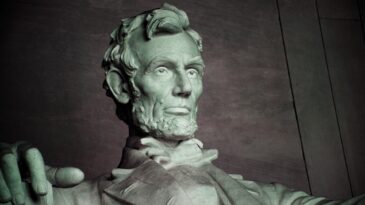
On Presidents' Day and just after the inauguration of President George W. Bush, we might do well to remember the inspiring words of one of our most important leaders. He presided over the country during the Civil War of the 1860s: Kentucky-born Abraham Lincoln. In a letter to a Kentuckian in 1855, Lincoln, then a leading politician in the Illinois legislature, put the crisis of the Republic in these memorable words:
You are not a friend to slavery in the abstract. In that speech you spoke of "the peaceful extinction of slavery," and used other expressions indicating your belief that the thing was at some time to have an end. Since then we have had thirtysix years of experience; and this experience has demonstrated, I think, that there is no peaceful extinction of slavery in prospect for us. ... On the question of liberty as a principle, we are not what we have been. When we were the political slaves of King George, and wanted to be free, we called the maxim that "all men are created equal" a self-evident truth, but now when we have grown fat, and have lost all dread of being slaves ourselves, we have become so greedy to be masters that we call the same maxim "a self-evident lie". ... Our political problem now is, "Can we as a nation continue together permanently---forever--half slave and half free?" The problem is too mighty for me--may God, in his mercy, superintend the solution.
Several years ago, an article in the PRESBYTERIAN OUTLOOK described how the Rev. James Smith, a Presbyterian pastor in Springfield, Ill., played a key role in converting Abraham Lincoln out of his original skepticism toward a greater confidence in Biblical faith.
Reflections on Romans 4:1-5, 13-17, Second Sunday in Lent
The Epistle reading for Lent 2 is Paul’s most extended discussion of Abraham. Paul points to Abraham to illustrate his doctrine of justification by grace through faith. The faith of Abraham is witnessed in his trust in the promise of God. (4:20).
Reflections on Matthew 4:1-9, First Sunday in Lent
I am haunted by the story of the temptation of Jesus in the wilderness. So was the Russian novelist, Fyodor Dostoyevsky. Early in his novel, The Brothers Karamazov, Ivan tells Alyosha of a poem he has written he calls "The Grand Inquisitor." In the prose/poem Jesus returns to earth in human form, but it is not to Nazareth in Galilee. It is to Seville in Spain in the midst of the Spanish Inquisition of the 16th century.
Lent 1: Genesis 2:15-3:7
Prayer after reading of the garden’s Keeper
Maker:
for gardens and walls;
for Eden and our homes to the east;
for your talk with us and ours with you;
The water that overwhelmed Indonesia, Sri Lanka, parts of India and Thailand, and killed thousands of people caught the attention of the world. The immensity of the tragedy was difficult to comprehend. The power and strength and force of the water were overwhelming.
What have people been saying about God and the Indian Ocean tsunami? I have seen quite a few “Why did you let this happen, God?” articles, from both inside and outside the church. There is, of course, nothing wrong with such pieces: such accusatory questions have precedent, even in the Scriptures. To ask this question of God in a time like this is not an impiety, but an understandable longing to see more clearly in the often-murky pool that is human existence.
In the fall of 1963, I entered Columbia Theological Seminary right after finishing Presbyterian College. Professor Felix Gear’s favorite phrase for us new students, “theological tadpoles,” was a compliment in my case. Shirley Guthrie took me under his wing as he did for the other 100 new “tadpoles” who wanted to learn what it means to be a Reformed theologian.
Professor Edward Dowey occasionally remarked that Karl Barth’s theology “is a secret known only to God and a few seminary professors.” Dowey attributed the comment to Leonard Trinterud, who, along with Dowey, served on the committee that wrote The Confession of 1967, and in part the comment may reflect the resistance they both encountered in the church to the Barthian perspective in the confession.
Shirley Guthrie was, in my opinion, one of the great theologians produced by American Presbyterianism. He did not do the things that theologians often do to gain national and international fame. He did not, by saying things that had never been said before, found a “new school of theology” with its own distinctive label.
“He taught us how to live and how to die.”
Charles Cousar
In early summer 2004, it became apparent to family and friends that Shirley Guthrie was not feeling well. He was having some digestive problems and had limited his eating to soup and light food in the hope that this would be of help.
Those of us who entered seminary in the latter years of Shirley Guthrie’s career are grateful that this teacher never relinquished his passion for sharing his gift with the church. Already a professor emeritus by the time I entered Columbia Theological Seminary, Shirley gave little evidence that he had laid aside his calling to instruct. Indeed, his beloved wife Vivian knew that, in many ways, the seminary classroom was his first home.
The 50th anniversary celebration of the landmark 1954 Brown v. Board of Education Supreme Court decision was a necessary spotlight on that ruling’s profound contribution to goodness in this nation. With the commemoration over, that spotlight becomes a searchlight, seeking us out in the darkness where in an audience we sit, comfortably, when it is our turn to take the stage.
"What time is it?" is one of the most frequently asked questions, and no one wearing a watch has difficulty answering it. But change the wording slightly and mystery abounds. "What is time?" has been pondered through the ages and we think about it especially at the coming of a new year. Time is elusive--you can't smell, taste, hear, or see it even though you may have a lot of it on your hands!
Scripture Readings: Deuteronomy 8:1-3, 6-10, 17-20; Psalm 65:9-14; James 1:12-18, 21-27; Matthew 6:25-33
”You crown the year with goodness, O God, and your paths overflow with plenty.” Amen.
How long do you suppose it has been since we have talked about – or even allowed ourselves to feel – a sufficiency of anything?
The morning routine at our house calls for reading the letters to the editor of the New York Times. Since the election, that’s become something of a trial. More often than not, the letters have to do with the role of “religion” in politics. Many letter-writers see the nation divided between the devout, who are concerned for “moral values,” and the secular, who are presumably interested in issues that have nothing to do with “morality,” such as war and peace, and the obligations of the rich toward the poor.
© Copyright 2026 The Presbyterian Outlook. All Rights Reserved. Privacy Statement. Website by Web Publisher PRO