

Editors Note: In its ongoing effort to support effective local church ministry and mission, the Outlook invites its readers to consider alternative models of church ministry being developed in sister churches around the denomination. This editorial combines with two other articles, Presbyterians and the "40 Days of Purpose" and Purpose-Driven and Presbyterian: One new paradigm at work, to provide analysis of the purpose-driven church paradigm
Many Reformed Christians shook their heads in dismay when Robert Schuller's book, Self-Esteem: The New Reformation (Word Books, 1982), made its way into print.
How could he possibly think that attaining a good self-concept could replace the gospel's drama of sin ... forgiveness ... redemption, they wondered.
How could categories drawn from pop psychology supplant terms used in holy Scripture, they protested.
The reformation he helped launch has been one not of theology but of methodology. That reformation commenced when he formed a church by visiting hundreds of Garden Grove, Calif., homes, asking folks, "Do you go to church?" and "If not, why not?" Based upon their responses, he shaped his drive-in church's liturgy around people's expressed desires rather than adhere to some of the classical traditions of the Reformed churches. In the process he jettisoned the language of Zion and replaced it with terms whose meanings were self-evident to secular people. He shortened or eliminated parts of worship perceived to be boring. In the process, communication effectiveness took precedence over confessional precision and biblical exposition.
Also featured in the Outlook forum this issue: The challenge of true compassion by Tim Filston
For my first Homiletics sermon at Westminster Theological Seminary my text was Paul's challenge to the elders of the church, in Acts 20:28-31: Keep watch over yourselves and all the flock of which the Holy Spirit has made you overseers. Be shepherds of the church of God, which he has bought with his own blood. I know that after I leave, grievous wolves will come in among you and will not spare the flock. Even from your own number persons will arise and distort the truth in order to draw away disciples after them. So be on your guard!
At the time I preached that sermon, I was sure that the current meaning of "wolves" was "Protestant Liberals," who had explained away much of the text of Holy Scripture. After decades of historical research, I have not changed that opinion. However, I have learned that religious wolves come in many shapes and sizes. Left to ourselves, acting without the restraining or inspiring grace of God's Spirit, any of us can tear and divide the flock. A great hymn, "The Church's One Foundation," describes it:
Though with a scornful wonder
This world sees her oppressed,
By schisms rent asunder,
By heresies distressed ...
When Luther wrote his first commentary on Galatians (1519), he was concerned to confront both heresy and schism. He knew that the leadership of the church was riddled by sexual antinomianism and other deadly sins, and that it was involved in theological heresy that had corrupted its center in Rome.
Also featured in the Outlook forum this issue: Unity and Purity by Richard Lovelace
Mae West said, "I used to be Snow White, but I drifted."
Isn't that the way we usually make compromises--we just drift a bit? We make an assumption that just seems right and worry about consequences later. Here's one: My private pursuit of happiness is no one's business. Many Americans believe that as long as we stay out of each other's lane and obey the traffic laws, then what happens inside my car should not concern you. Yet, on the contrary, what happens inside the car affects how we relate to traffic. Still, the prevailing assumption is that private freedom trumps common values. Many within the Presbyterian Church (U.S.A.) have been chasing this trend.
This drift towards the priority of the private has been gradual but steady. And like the frog in the kettle that cannot detect the temperature rising, our common doctrinal values are slowly getting cooked. There is such confusion about doctrine that many people in the church deflect time-tested, biblical truth, thinking that they are being more Presbyterian by doing so. Some think that exchanging our confessional point of reference for the Spirit of the Age is what it means to be the "church reformed and always reforming."
Editors Note: In its ongoing effort to support effective local church ministry and mission, the Outlook invites its readers to consider alternative models of church ministry being developed in sister churches around the denomination. This analysis of the 40 Days of Purpose combines with two other articles, A new Reformation? and Purpose-Driven and Presbyterian: One new paradigm at work, to provide analysis of the purpose-driven church paradigm
In the spring of 2004, Covenant Church in San Antonio, Texas, joined the international throng of congregations to employ Rick Warren's "40 Days of Purpose" campaign. Our session read and discussed Warren's book, The Purpose-Driven Life, and formed the steering committee for our campaign. After paying the licensing fee, we received all the necessary resources and materials required to conduct a campaign for our congregation according to Warren's protocol.
The campaign, which invites the participation of every church member, consists of a variety of interrelated events and experiences. The most important is the reading of The Purpose-Driven Life, which is organized into 40 daily readings. Other elements include: weekly small group discussions of the readings, large group "catalytic" events such as kick-off celebrations, templates for coordination of worship services and sermons, a mission and ministry fair, and a closing celebration.
While we did not utilize all of the components of the campaign, most notably the sermon notes and outlines, we did add some distinctively Presbyterian flavors to our version of "40 Days of Purpose." For our adult Sunday church school classes, we adapted lessons from the curriculum resource The Great Ends of the Church by Joseph Small [©1997 Congregational Ministries Publishing, Presbyterian Church (USA), Louisville Ky.] It corresponds to the five purposes of The Purpose-Driven Life. The language and order are different, however, so we ordered the Great Ends according to the order of the purposes:
Worship -- The Maintenance Of Divine Worship
Fellowship -- The Shelter, Nurture, and Spiritual Fellowship of the Children of God
Discipleship -- The Preservation of the truth
Ministry -- The Promotion of Social Righteousness
Evangelism -- The Proclamation of the Gospel for the Salvation of Humankind
c. 2006 Religion News Service
When I attended the 'The Hand of God in U.S. Politics' seminar recently at the World Economic Forum in Davos, Switzerland, the attendees seemed alarmed about the power of 'the religious right.' As the panelists and attendees voiced their concern, I sat quietly wondering, 'How is it that when the world thinks of American evangelicals, it thinks primarily of political issues instead of our love for others or our loyalty to Jesus?'
It occurred to me that the misconception may be our own fault. Could it be that we have gone 'off message'? It seems that the only message many people associate with the church is a message of condemnation. After 9-11, some church leaders began pointing their fingers in blame at national social sins as the reason for what
They seemed to believe was God's judgment. Again, in the aftermath of Hurricane Katrina, we heard some Christians suggesting it was God's judgment.
But could it be that God is less concerned about the sin of the world than he is about the sin within the church?
Through the Lenten window
the loudspeaker blares "Repent and Believe."
We light our candle and try to see through the darkness.
The loudspeaker won't stop:
Repent and believe. Repent and believe. Repent
and believe.
On and on and on and on.
In the distance through the noise
Jesus is speaking.
Suffer. Rejection. Death. Rise in three days.
Peter's voice now through the loudspeaker,
over the voice of Jesus.
"God forbid it, Lord. This must never happen to you."
Then the One who had earlier called Peter the Rock
on whom he would build his Church,
now calls Peter Satan! Get behind me, Satan!
Peter, a stumbling block, worldly, not godly.
Peter who had followed Jesus immediately,
fiercely, faithfully,
Peter who knew Jesus, Peter who called Jesus the Messiah,
This Peter was now a stumbling block to the One whom he
so fervently loved!
Repent and believe! Repent and believe!
Our church school teacher tried to dilute the story,
but I had a picture of Jesus with the whip in his hand
The whip was snapping ... I could almost hear it. ...
The moneychangers cowered against the whip's threat;
Tables were overturned.
Some of the men were up and running.
The cows and sheep were scattering.
Doves were scrambling in their cages.
Coins were rolling and flying through the air.
The face of Jesus showed fury!
Cows and sheep and doves sold for sacrifices,
Roman money changed into the Tyrian shekels
required for the annual head tax
that went into the temple treasury.
In other words, it was church business.
But Jesus thought otherwise:
God's house was being desecrated.
He drove the moneychangers out of the temple.
But that was then
and that was that.
Except of course.
they did tear down the temple ...
Jesus' temple
and he did rebuild it three days later.
Crucifixion. Resurrection.
Then the disciples understood
that the Church was the Body of Jesus.
If one member suffers, all suffer together ... (I Cor. 12:26.)
There are certainly many parts of the church hurting at this time. I am particularly aware of the Presbyterian Historical Society (PHS) and its facility in Montreat. I served as the moderator of the task forced charged with the responsibility of exploring the future direction for the PHS operations.
My first trip to Montreat was in 1970, one of the first Youth Conferences. Several members of our youth group approached the session to ask permission to raise money in order to attend the youth conference in Montreat. This was highly unusual in a PCUS church that strictly adhered to a unified budget. Our youth director took me to the PHS facility because our session had sent its records there that summer to be copied. She showed me the minutes where my name had been recorded. I was impressed that our church's records could be found in Montreat. But I was more impressed with Lookout Mountain, and the coffee house (this was the 70's) in Upper Anderson Auditorium, and the worship services. Even so, I caught a glimpse of our connectional church.
If it ain't broke, don't fix it. If it's broke, restructure it.
Presbyterians in the pews may be excused for rolling their eyes over reports that the General Assembly Council is restructuring itself. Many will tell you that the GAC is broke--functionally, if not financially. Many wonder if it can be rebuilt at all. Some think it's not worth the effort.
Such a state of affairs is tragic, to say the least. Organized to implement the directives of the General Assemblies to facilitate the fulfillment of Christ's commission, the GAC is endowed with a high purpose, a broad authority, and huge resources.
The model currently in use was structured to broaden the representation on the elected GAC and to recruit multi-gifted members to serve. On paper the structure is very post-modern, being led not by a lofty hierarchy but by representative elders and ministers who share equivalent authority with their colleagues throughout the denomination. True to those intentions, the members of the GAC have invested an enormous number of hours into the task entrusted them.
Nevertheless, the processes keep stuttering, the work keeps stumbling, and the systems keep imploding. And folks in the pews sense a widening disconnect between national church and local church.

When I was a child we didn't have Lent,
not down in Nashville, Tennessee,
where my father was a Presbyterian minister,
That's not to say there wasn't any of that "giving up"
business going on;
It's just that Presbyterians didn't do it.
Oh, we waved our fronds as we went into the sanctuary
on Palm Sunday,
and we observed Holy Week,
the most memorable day being Friday
when we had hot cross buns and didn't go to school,
but went instead to the worship service downtown,
and listened to one of those Last Words Sermons
and afterwards ate at the B & W cafeteria.
I am a scientist. I am also a Christian. As a scientist, I believe in the laws of nature that govern much -- some might say all -- of what happens. As a Christian, I affirm that God designed and created the universe and its natural laws, although Scripture is vague about the details. In this sense, I believe in God's intelligent design. That is theology, not science.
However the proponents of "Intelligent Design" (ID) claim something different. ID is proposed as a scientifically valid alternative to Darwinian natural selection. It holds that "certain features in the universe and of living things are best explained by an intelligent cause, not an undirected process such as natural selection" (definition from the Discovery Institute web site). ID is attractive to many religious people because it appears to offer a scientific basis for William Paley's "watch found on the beach" design argument for God. However, trust in ID may be premature.
U.S. District Court Judge John E. Jones III, in his decision in Tammy Kitzmiller, et al. v. Dover Area School District, et al., wrote: "After a searching review of the record and applicable case law, we find that while ID arguments may be true, a proposition on which the Court takes no position, ID is not science" (p.64). Most scientists agree. As commonly understood, an acceptable scientific explanation may use only empirically established universal principles ("laws of nature"). "Design" as understood by ID does not satisfy this criterion. ID proponents argue that science should be redefined to permit non-natural causes for certain kinds of phenomena, which they claim can be identified empirically by normal scientific methods.
The recent ruling by federal Judge John E. Jones III that it is unconstitutional for public schools in Dover, Pa., to offer intelligent design as a scientifically valid alternative to evolution is a graphic reminder that our schools are the most visible battlegrounds in today's culture wars.
The divisive struggles deciding our nation's future are being fought at thousands of up-close-and-personal public school board meetings. At such bitter sessions, board members argue with one another and with an audience of often-angry parents.
In October 2004, the Dover school board voted to make certain that "students will be made aware of gaps/problems in Darwin's theory and of other theories of evolution including, but not limited to, intelligent design." The clear aim was to present intelligent design (or ID) as a scientific explanation for the creation of the world and the human family.
Although ID adherents rarely mention God, most of them are theologically conservative Christians and frequently speak of their faith in creationism -- the belief that the biblical account of creation found in Genesis is scientifically accurate.
c. 2005 Religion News Service
Also featured in the Outlook forum this issue: Reflections on Intelligent Design by Mark Achtemeier
Intelligent design has become a common cultural code phrase. It appears in our newspapers. It inspires indignation, delight, dismay, confusion and curiosity. A deeper look is worth the effort to understand what is going on.
To understand how "Intelligent Design" is used in our society today, we need to look back at the history of evolution over the past 150 years, and fundamentalist responses to it beginning in about 1920. We also need to think clearly about the finer distinctions between modern science and religion.
Darwin's Origins
The history of evolution took wing with the publication of Darwin's Origin of the Species on November 22, 1859. In it, he outlined the implications of observations made while traveling on the British survey ship Beagle 1831-1836. Darwin's ideas created religious upset in some quarters, and continue to do so to this day.
Unbeknownst to Darwin, Gregor Mendel, a Czech-born Austrian monk, was conducting experiments on the genetics of pea plants that fit well with Darwin's observations. He published two lectures in 1865 and journal articles in 1866. His work was unnoticed, and forgotten for 30 years.
Mendel's work includes some fundamentals we all appreciate: Everyone has two biological parents. Children look like their parents. Children are not identical to their parents. Most of us consider these three obvious facts truisms, and therefore we believe the fundamentals of evolution.
To these basics, Darwin added that, for the animals he observed, not all offspring survive, and that only the progeny that survive to have descendents will pass along their genetic material. Mendel added the notion of genes, the particles of heredity that parents pass to children in a way that a child receives half his genetic complement from each parent, without blending. He worked out the basic arithmetic of inheritance.
In 1902, Walter Sutton of Columbia University found that grasshopper sperm cells had only half as many chromosomes (DNA strands in the cell nucleus) as other cells. He asserted that genes are part of chromosomes, and that they are inherited, half from each parent, just as Mendel described. This notion was widely accepted by the 1950s.
In 1953, James Watson and Francis Crick published their description of DNA. They revealed the now-famous double helix, a molecule shaped like a spiral staircase in which each step was one of four letters in our basic genetic code. By 2001, the Human Genome Project had decoded a complete copy of the human genome: a spiral stair with 3.2 billion steps! Our DNA is in 23 pairs of chromosomes (seen by Sutton a century earlier) and we inherit half of them from each parent, as Mendel had deduced in 1865.
Modern evolution, from the viewpoint of the biological sciences, consists of far more than Darwin's work. For example, the DNA coding structure is found in every known living thing on our planet. It is one line of evidence for a central tenet of evolution, "Common Descent," which holds that all life on earth is genetically linked by common ancestors. We are members of a single family of life on earth.
Modern evolution also uses lines of evidence from plate tectonics and geology. Plate tectonics is the well-regarded science of how continental plates form and move on the liquid core of the earth's mantle. It provides a coherent explanation for findings of identical fossils at what are today widely distant places. It does the same for some modern animals as well: marsupials in Australia, and the opossum in North America with no apparent connection other than through plate tectonics.
Also featured in the Outlook forum this issue: Intelligent design--a cultural code phrase by Walter R. T. Witschey
Even a casual glimpse at current headlines leaves little doubt that the Intelligent Design debate has become yet another battleground in the culture wars, with culturally-aggressive fundamentalists and equally-militant secularists well represented among the contending parties. Beneath the surface-level politics, however, there are substantial scientific and philosophical issues at play that ought to be of interest to any thinking Christian. It is the purpose of this essay to highlight some of these more substantive issues, lest they disappear beneath the waves of partisan politics.
One of the founding documents of the Intelligent Design Movement is Darwin's Black Box, by Michael Behe. Those who have seen Intelligent Design linked repeatedly with biblical Creationism in the popular press may be surprised to find that Behe's book contains no scriptural citations, no references to Genesis, no theological arguments, no appeals to faith, no sweeping rejection of evolutionary theory and no speculation about the nature or identity of a Creator.
What Behe's book does contain is a lot of biochemistry: technical descriptions of the chemical machinery that underlies life-processes such as blood clotting, immune response, vision, etc. These molecular machines turn out to be vastly complex, Rube Goldberg contraptions whose operation depends on the precise interaction of dozens of large, intricately-structured protein molecules.
Behe contends that while evolutionary processes of random mutation and natural selection can account for much of the living world around us, they cannot explain significant portions of what modern biochemistry has uncovered at the molecular-level of living organisms. Why is this so?
So what are we to make of Intelligent Design? Perhaps a glimpse at life between two offshoots of the Presbyterian Church (U.S.A.) can give us insight. Take a look at the Orthodox Presbyterian Church (OPC) and the Presbyterian Church in America (PCA).
These two denominations hold many beliefs in common: adherence to the inerrancy of Scripture, subscription to five point Calvinism, opposition to higher criticism, rejection of women's ordination, repudiation of modernism and post-modernism. Yet they remain separate denominations. Why?
One reason: They do not read the first chapter of the Bible in quite the same way.
While both denominations allow some latitude in interpretation, the PCA leans toward a literal, scientific chronological reading of the six days of creation. Ordination candidates who question whether the world was created in 144 hours about 6,000 years ago risk disqualification.
The OPC takes a less certain view. While some of its clergy and elders hold to six 24-hour periods of creation, "those who hold to the day-age theory or framework hypothesis argue that the biblical text is inconclusive as to the length of the days ..." They add that the Westminster Confession (and its catechisms) does not require exacting agreement, so "there must be latitude in this area." Yes, the OPC allows latitude in interpretation; see their Web site: https://www.opc.org/qa.html?question_id=131 .
Note the two kinds of latitude they affirm. One suggests that each of the six days may constitute an indeterminate length of time. The other, the "framework hypothesis," requires more explanation.
Wouldn't it be great to be able to go back to the good ol' days?
Many a Presbyterian totes around a mental sketchbook filled with scenes depicting how the church ought to be. Its pastel pictures strikingly resemble how the church used to be, that is, how we remember it used to be.
A quick comparison to the church of today produces piqued exasperation. The soft pastels have been overwhelmed by glaring, clashing neons. The view has changed and not for the better.
We know we can't blame the church for the accelerated pace of living and for the startling turns in the road. As warned over 35 years ago by Alvin Toffler, Future Shock is our world. However, when we gather with the household of God, we expect to find at least an hour's respite. We want to sense a certain steadiness, a reassurance that "God's in his heaven; all's right with the world." Instead, the church provides disruptions and disturbances not conceived in those good ol' days,
Can't we turn down the conflict? Can't we reclaim the way it used to be? Can't we go back to those good ol' days?
Then again, when are those good ol' days?

Are you one of those miniatures collectors? Do you know any one who is? Back in the days when printing presses would utilize little blocks of wood and metal, with forms of each letter with which they would lay out the type for their newspaper or an advertisement, they would put those letters in printers' boxes. That's how they sorted their As from their Bs, Cs, and so forth.
Today, the letter blocks are long gone, but the printers' trays still sell. You find them in antiques stores and flea markets. They get scooped up by collectors--miniatures collectors. They provide just the right sized cubby holes in which to display tiny cars, tables, chairs, dishes, figurines, and other decorative items that are less than a square inch in size.
Why? What's the value of having unusable tiny imitations of the real thing?
An international team of psychologists is studying this phenomenon, in the hope that an answer to this mystery could lead to solving countless other unanswered mysteries. All kidding aside, one part of the answer may be that collecting small items affords persons the opportunity to get their arms around their world, or literally, get their hands around it. When you look at miniatures, you get to see things more completely. You get a grip--literally--on life.
That may be one of the reasons that so many people have been so taken with the movie "The Passion of the Christ"--which broke attendance records almost everywhere that it has was released--including Egypt, Syria, and Lebanon. In just two hours and six minutes, that movie gave people a handle on Jesus. Frankly, it exposes the horrors of violence and evil that thrive in human hearts, but in the process, that movie also provides us a picture of the sacrificial suffering of Jesus.
Martin Luther reminded us we live in a world "with devils filled that threaten to undo us." This line from his hymn, A Mighty Fortress is Our God, is a powerful image of the forces that seek to pull us apart. In our church, in our nation and around the world, hostilities and hatreds thrive and the peace and unity for which we yearn seem far away.
Does the church have a word to speak into this racial and political strife? In many times of crisis, the church has borne witness to the life-giving power of the gospel in living that takes up the cross of Christ. It has also borne witness in its confessions. One of those confessions has come to us from the suffering experienced by those in the Dutch Reformed Mission Church during the time of apartheid in South Africa -- the Belhar Confession.
So, before answering the questions why Belhar and why now, it might be better to first ask, "What is Belhar?" In response to the oppression of apartheid in South Africa, the Dutch Reformed Mission Church proposed this confession of the Christian faith in a synodical meeting in the town of Belhar in 1982 and adopted it in 1986. It was not only a stance against the injustices of apartheid, it also provided a theological rationale for a way forward in its aftermath. The process of the Truth and Reconciliation Commission in South Africa, which focused on restorative justice rather than punishment, owes much of its motive power to the Belhar Confession.
There is now, in the Presbyterian Church (U.S.A.) and in the larger church, a renewed interest in the Belhar Confession. The Reformed Church in America, one of our Formula of Agreement partner churches, is currently considering whether it should be included among their confessional documents.
It's official. Fibbing is OK if it serves a higher purpose. Oprah said so.*
The queen of all media tossed this ethical grenade recently when she called CNN's Larry King to defend his guest, James Frey, author of mega-best-seller A Million Little Pieces. Frey's memoir of addiction and recovery was featured on the "Oprah Winfrey Show" when it was anointed the October selection of the world's most powerful book club.
The champagne went flat in January when The Smoking Gun, a Web site devoted to investigative reporting, posted a damning story with the tantalizing tagline "The Man Who Conned Oprah." What followed was an old-school piece of "gotcha!" journalism that showed how Frey had embellished and, in some cases, fabricated significant events in the account of his life. Frey admitted to King he had taken dramatic license but said he stood by "the essential truth" of his life. As King was about to sign off, Winfrey phoned to say the report outing Frey was "much ado about nothing."
What mattered, Winfrey said, was that millions of people struggling with their own monkey-on-the-back habits had read Frey's book and felt better. In a nation addicted to feeling good, she implied, swallowing a little pill of deception is a small price to pay.
Winfrey's take on lying is not new -- Machiavelli said it first when he wrote, "the end justifies the means," the greatest rationalization for bad acts ever -- and it appears plenty of Americans agree.
It's one thing to obey God. It's another thing to obey God. Or to put it in the words of H. Russel Botman, "In retrospect we learned to decipher a difference between 'simple obedience' and 'complex obedience.'"
Botman was speaking, along with colleague Dirk Smit, at the Sprunt Lectures at Union/PSCE in Richmond, outlining how the theological work of forming and adopting the Belhar Confession had helped his country find its way out of the practice of apartheid. South Africa will never be the same, thanks to these two men and their colleagues who shared the task of writing Belhar--and thanks to the courage of their people who pursued a path of "complex obedience."
What's that? As in most other situations, the text carries with it a subtext. The text here is the Confession of Belhar, a potent application of Christian theology and ethics to the church's life in secular society. The subtext is another document, the Kairos Document, which emerged in the days that intervened between Belhar's composition and adoption.
True to their denomination's policies, Belhar was proposed at a general synod meeting (1982), but it needed to be studied for four years before it could be adopted by the next synod meeting. Three years into that process, the Kairos Document was published as "an attempt to develop ... an alternative biblical and theological model that will in turn lead to forms of activity that will make a real difference to the future of our country." Kairos was an uncompromising, prophetic call to action.
Kairos lamented that, "the Church is divided. ... Even within the same denomination there are in fact two Churches. In the life and death conflict between different social forces that has come to a head in South Africa today, there are Christians (or at least people who profess to be Christians) on both sides of the conflict--and some who are trying to sit on the fence!" Specifically, the document outlines three competing kinds of theology in the church: "'State Theology,' 'Church Theology,' and 'Prophetic Theology.'"
"If we leave the PC(USA), where are we going to go?" The troubled question came from an evangelical woman, a young leader and emerging scholar in conservative circles. At issue was the possibility of a split in the denomination, likely to be led by disaffected conservatives. "We know where the women stand in the PCA [Presbyterian Church in America]," she said. "The EPC [Evangelical Presbyterian Church] said women's ordination is optional, and they've opted to 'just say no.'" Then came the clincher. Referring to the testosterone-driven conference she and I were attending, she added, "Frankly, I hear these men saying they will do things differently, but I don't know if I can trust them."
How tragic it would be if, in the midst of a grand two-year celebration of women's ordination in the PC(USA), a long-threatened split occurred that would launch another denomination where women's leadership role could possibly be diminished.
What celebration? Well, one hundred years ago (1906) a woman was first ordained a deacon in the UPCNA. Seventy-five years ago (1930) a woman was first ordained a ruling elder in the PCUSA. Fifty years ago (1956), the first woman was ordained a minister of word and sacrament. This convergence of anniversaries makes 2006 a fitting time to celebrate the ways we Presbyterians have promoted gender equality in a century long to be remembered for Women's Suffrage, gender-inclusive language, and The Feminine Mystique.
I had just a short time with Courtney, a six-year-old girl who helped me clean up after church school. In a quick fifteen minutes, I needed to finish the job and put on my preaching robe to lead the worship service. I made small talk with her as we gathered the magazine pages and put the glue sticks away. Her parents did not attend the rural church in South Louisiana, but she visited regularly with a friend. I did not know her well, so I was in the middle of asking her those generic grown-up questions. I finished inquiring about her favorite subject in school and moved on to, "Courtney, what do you want to do when you grow up?" I expected the same answers that I usually hear: an astronaut, a ballerina or a teacher.
Courtney stopped. A smile began in the corner of her mouth that told me she was bursting with the news. "I want to be...um. I want to do what you do. I want to be a pastor."
"You do?" My excitement brimmed so that I was the one bursting. We stood in a tiny classroom in a country church, but it felt like Courtney and I had passed by a huge milestone and changed history. It caused me to look back to see the long stretch behind us and made me resolve to finish the road ahead.
I grew up in the seventies, when little girls were told that they could do anything. I clearly remember when I was Courtney's age and my grade school teacher informed me that I could become the president of the United States, if I wanted to. But I did not want to be president; I, like Courtney, wanted to be in the ministry. Of course, during that time women struggled to have it all and I saw glass ceilings shatter every day in boardrooms, on the Supreme Court, and in Congress. Yet I had never seen a woman pastor before, so I could not conceive of leading a congregation. I did not know that it was an option.
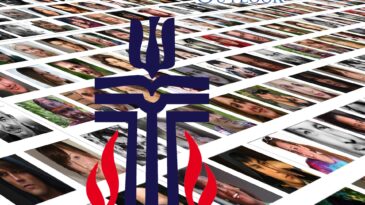
In October, 1955, fifty plus years ago, the United Presbyterian Church in the U.S.A voted in General Assembly to ordain women to the Ministry of Word and Sacrament. In 1956, the Cayuga-Syracuse Presbytery in New York ordained Margaret Towner, the first women clergyman of the denomination. In 1965, the Hanover Presbytery in Virginia ordained Rachel Henderlite the first woman to be so recognized in the Presbyterian Church in the U.S. These ordinations marked a climax in the history of Presbyterians among whom the role of women in the church had been growing for well over a century. Lois A. Boyd and R. Douglas Brackenridge* told this story in Presbyterian Women in America, Two Centuries of a Quest for Status (1983) published by the Presbyterian Historical Society. On the fiftieth anniversary of the extension of this ordination right to women it is appropriate to recall the women's progress in the life of Presbyterians.
Over the centuries in our male-dominated country, women have been identified and treated in different ways in both society and the church. Early on they were considered mostly "ornamental," as it was put. But males could not do without females. In those early days, a woman named Mary Wollstonecraft published the explosive A Vindication of the Rights of Women (1772), printed in Philadelphia shortly before Americans had adopted a Declaration of Independence in 1776. A Presbyterian woman (turned Unitarian), Elizabeth Cady Stanton, helped write the "Declaration of Sentiments" (1848) based on 1776 male-oriented document. Stanton published The Woman's Bible (1895) in which she and other women celebrated the noted females whose contributions may be found throughout the Scriptures.
In August 1920, Presbyterian President Woodrow Wilson signed into existence the XIX Amendment to the Constitution of the United States granting women the right to vote. At the same time women were gaining ground in public matters, they gained ground in ecclesiastical affairs. In the nineteenth century they had started women's organizations apart from males. Women became deeply involved in the support of and participation in educational endeavors such as Sunday Schools, home and foreign mission work. They formed their own societies to further causes that interested them.
Moreover, because of the "unrest" in the churches, the PCUSA granted the right of women to serve as "brother deacons" (as they were called) in 1922-1923, and "brother elders" in 1930. Ruling elder and mission executive, Robert E. Speer, together with Katherine Bennet and Margaret Hodge, played important roles in this movement in the PCUSA, demonstrating a kind of "de facto" equality in the process. Later on Eugene Caron Blake led the movement in the General Assembly to ordain women as ministers of "Word and Sacrament."
Enter Margaret E. Towner. Towner, a New Yorker, left a career as medical photographer at the Mayo Clinic to study education at Syracuse University prior to assuming the call of Christian education at the East Genesee (N.Y.) Church. Towner then pursued the three-year Bachelor of Divinity Degree at Union Theological Seminary in New York. She believed such training would be helpful to her in Christian Education. And she flourished as Christian Educator in Allentown, Pa.
Special to The Tampa Tribune, used by permission
Editor's note: Derek Maul, a Presbyterian free-lance writer who has written for the Presbyterian News Service and Presbyterians Today magazine, wrote this piece shortly after a church camp supported by Peace River and Tampa Bay presbyteries was forced by threats of violence to cancel a leadership event for Muslim youth (see news story on page 6.) -- Jerry L. Van Marter, coordinator of Presbyterian News Service.
TAMPA, FLA. -- (PNS) My friends run a church camp. You remember church camp? Campfires, marshmallows, best friends, starlit nights. "Kum Ba Yah," holding hands, cookouts, rain every day.
Church camp. You know, the place that's all about people coming together, prayer, hugs, surmounting barriers, spiritual breakthroughs, learning to listen to God. It's about as far away from politics as you can get. Or at least it should be.
Last week my friends had their lives and their children threatened and their patriotism questioned. They had to close the church camp and take their children to a safe place. They had to make other arrangements for a group of -- this is ironic -- international students, visitors from overseas celebrating Christmas and learning about America.
So why did my friends and their guests have to leave in such a hurry? Because their safety and their lives were threatened by Americans who wanted to carry a political agenda into the realm of marshmallows and "Kum Ba Yah."
About a year ago, chest pains and breathing troubles prompted me to see the doctor. The diagnosis proved to be minor and the course of treatment easy. But the diagnostic process was memorable, to say the least.
The family doctor determined to run some tests. He marked a few items on his page-long checklist, placed the clipboard on a door hook, and while walking out, said, "I'll check back with you after the tests."
A few minutes later the nurse marched me to the x-ray department where the technician took a few photographs. She took me to another room, where I blew into a clear plastic thing that looked like an inverted saxophone. Then she took me back to the examination room, looked at the checklist, twisted her nose a bit, looked at me, twisted her nose again, shrugged and then asked, "Are your ears feeling plugged?"
"Not really, but maybe a little in my right ear."
She pulled out an otoscope, studied both ear canals, and commented, "Well, I see a little extra wax in your right ear." One warm water ear rinse later, she made a few markings on the chart, placed it back on the door hook, and walked out.
Upon his return the doctor looked at the first chart. "You're x-rays look good. The lungs are clear." He looked at the next chart. "Your breathing is strong." He looked at the third chart. He twisted his nose a bit, looked at me, twisted his nose again, and then with a most puzzled look, asked, "Did the nurse flush out your ears?"
"Yes, sir."
"She was supposed to give you an EKG, not an ear flush." He looked at the checklist, saw that his mark was a bit off the mark, and said, "I'll send her back in to do the EKG." He shrugged and smiled. "For what it's worth, you just got a free ear flush. Hope it felt good."
A sheepish nurse returned, rolling in an EKG machine. Her embarrassment quickly turned into our shared laughing.
As I left the office my laughing turned reflective. Dumbstruck, I realized that in the spiritual life, plugged ear canals cause sick hearts.
What hardened the heart of Pharaoh? What hardened the hearts of Israel's enemies, and at times the hearts of the Israelites themselves? What hardened the hearts of Jesus' detractors? One simple answer: their hard-hearts grew out of their deaf ears. Referring to that history, three times the book of Hebrews warns believers, Today, if you hear his voice, harden not your hearts as in the day of rebellion.
© Copyright 2026 The Presbyterian Outlook. All Rights Reserved. Privacy Statement. Website by Web Publisher PRO