

In his timely article this past June, Cliff Kirkpatrick confronted the statistics of our shrinking membership. He offered some practical tips to respond effectively, and his emphasis upon outreach is on target. He points out what we have been neglecting; now let us consider why we have neglected it.
The annual summer tradition of Christian education called Vacation Bible School or Vacation Church School began at the end of the 19th century with a clear vision and mission. An enterprising Baptist laywoman, whose idea was to get children off the streets in New York City and teach them something about the Bible, rented a beer hall on the East Side of the city and held her Bible School. The entire summer for the next two years was filled with activities, Bible Stories, memory verses, and snacks. According to my research, her venture was very successful for those years. Then her pastor insisted the program be moved into the church building. This was done for several weeks but participation dropped so drastically that the program was moved back to the beer hall, where it continued as an example of a church reaching out into the community to share its faith.
What began as a social program to get children off the streets has grown in many denominations to be a primary educational/evangelistic summer endeavor that takes many forms.
People often make the mistake of thinking all that is involved in planning Vacation Bible School is going to your local Christian bookstore, buying packets of material, recruiting a few leaders with the famous words "there won't be anything to it," putting up posters, waiting for the beginning date to roll around and anticipating the arrival of the kids. That buy-the-resource approach misses an important first step. The CE Committee, the Educator, and others concerned about the overall educational ministry in a congregation need to answer a few questions.
It is Vacation Bible School planning time in many churches. This year's curricula from the following publishers are included:
Augsburg Publishing
Cokesbury
Concordia
Congregational Ministries
Cook Communications
Group Publishing
Standard Publishing
Editor's Note: This guest viewpoint is a critique of stories and an editorial in the Outlook relating to torture. It originally appeared on Presbynet and is used by permission.
As I read the allegations and accusations of torture and abuse posted by Jack Haberer, editor of The Presbyterian Outlook, Princeton Seminary professor George Hunsinger, and the Moderator of General Assembly Rick Ufford-Chase, I felt weary; a weariness born of reading the same tired arguments repeated endlessly.
Jack Haberer, in "Clichés and truisms," an editorial appearing in The Presbyterian Outlook, first asks if the United States of America as the world's "lone superpower" has "sufficient character and courage to contain the corrosive effects of unchecked power in this new world"? He then lauds the US for "withdrawing" after the completion of Operation Desert Storm in 1991. This, according to Haberer, encouraged "the hope of other nations that we would not over-assert our power."
Mr. Haberer should be aware that the objective of Operation Desert Shield/Storm was to eject Iraqi forces from Kuwait, not remove the regime of Saddam Hussein. Effecting regime change subsequently became US policy during the Clinton administration. Furthermore, while the bulk of US ground, air and sea forces were re-deployed, a significant US and Allied presence remained in the Persian Gulf to maintain the "no fly zones" and deter any further aggression by Saddam Hussein. Meanwhile, after 1992, the Clinton administration increased the military's operational tempo by 300-percent with humanitarian and peacekeeping missions to Somalia, Haiti, the Balkans and Rwanda while maintaining an active presence in Europe and South Korea as well as the Persian Gulf. Throughout the 1990s, on any given day, US Army forces were deployed in approximately seventy countries world-wide accomplishing missions as varied as keeping Serbians from murdering Muslim Albanian Kosovars, removing landmines and other explosives from Cambodia, Laos and Vietnam and helping the Vietnamese identify their missing-in-action from nearly thirty years of war between 1946 and 1975.
Editor's Note: This guest viewpoint is a response to Earl H. Tilford Jr. (printed this issue) and Dean Waldt, who had written a critique of stories and an editorial in the Outlook relating to torture. These materials were written before two meetings on torture in mid-January. This story originally appeared on Presbynet and is used by permission.
Outlook Article Links:
"Clichés and truisms," editorial by Jack Haberer
"Why the torture abuse scandal matters" by George Hunsinger
"No2 Torture" by Rick Ufford-Chase
"Americans have tortured prisoners in several locations around the world, the U.S. government has moved prisoners to countries where torture is practiced by American allies, the Bush administration has at times sought to justify torture, and all of this is the tragic fruit from a war that violates traditional Christian "Just War" doctrine. Presbyterians and all people of faith need to be concerned and actively working to change our governmental policies."
The recent Presbyweb writings of Earl H. Tilford Jr. and Dean Waldt, and the notes by their supporters, have been very critical of some church leaders who are concerned about torture being done by Americans. The thoughtful leaders being attacked include the popular PC(USA) General Assembly moderator, the new evangelical editor of the independent The Presbyterian Outlook magazine, and a professor of theology at Princeton Seminary.
Dean Waldt is critical of the GA moderator's concern about torture and asks, "Where is this clear and compelling evidence? I've been reading the newspapers and watching cable news along with everyone else. How did I miss this?"
Today's news (December 30) is that "the number of Guantánamo Bay prisoners taking part in a hunger strike that began nearly five months ago has surged to 84 since Christmas Day, the U.S. military said on Thursday. ... The detainees began the strike in early August after the military reneged on promises to bring the prison into compliance with the Geneva Conventions, their lawyers said. Detainees are willing to starve to death to demand humane treatment and a fair hearing on whether they must stay, the lawyers said."
The New York Times had previously reported that "The International Committee of the Red Cross has charged in confidential reports to the United States government that the American military has intentionally used psychological and sometimes physical coercion ''tantamount to torture'' on prisoners at Guantánamo Bay, Cuba."
"I want to transfer to the Presbyterian Church because in this denomination children matter." I don't remember the name of the speaker. It has been 20 years or so. But his words left their imprint.
We were proceeding through routine approvals of minister transfers in a stated presbytery meeting. Interest picked up when this longtime military chaplain, a Baptist, shared how his journey of faith had led him to the Reformed theological camp. "In my former tradition, we dedicated infants and educated children in the hope that they someday would profess faith in Jesus Christ. Upon their profession, they would get baptized and thereby be welcomed into the body of Christ. In the Reformed tradition you all baptize them into the body and educate them into personal faith. I think that's the right sequence."
As a fairly recent convert to Presbyterianism at the time, I found his words reassuring, especially so, since the one theological sticking point for me had been the practice of infant baptism. Exercising my office under the Presbyterian Church's constitution, I had learned well how to present to parents the covenantal concept of baptism, rooted as it is in the practice of infant circumcision dating to the eighth day of Isaac's life. But I still harbored some doubts about such a practice. This chaplain helped convert me into a passionate advocate of our denomination's sacramental theology.
These are acutely trying times for the Christian remnant residing in areas governed by the Palestinian Authority. Tens of thousands have abandoned their holy sites and ancestral properties to move abroad, while those who remain do so as a beleaguered and dwindling minority. Christians, who used to comprise the vast majority of the residents in the Bethlehem area, will fall past a critical point -- and their community will no longer be viable.
Palestinian Christian leaders who should be protecting their co-religionists are instead abandoning them to the forces of radical Islam. Muslim religious law (Sharia) is an enormous influence on the inner workings of the Palestinian Authority. Indeed, the Palestinian Constitution states, "the Sharia will be the paramount source of legislation." By granting Islamic law primacy over every other legal source, including international human rights conventions, the minorities living in the Palestinian Authority are denied proper redress via the courts.
In fact, the Christians have little protection at all from any source, and have faced virtually uninterrupted persecution during the decade since the Oslo peace process began. They live amid a dominant (greater than 98 percent) Muslim population that is increasingly agitated and xenophobic. Intimidation is directed at Christians who dare question the political, economic and social agenda of the Hamas and Islamic Jihad terrorist groups.
Show me a major city that has a significant African-American population, and I'll show you a school called "Martin Luther King Jr. Elementary (or Middle or High) School." Its students will be nearly, or 100 percent, African-American. Wasn't MLK promoting racial integration?
Show me a denomination that has spoken prophetically against race hatred, against apartheid, against segregation, and against all kinds of social injustice, and I'll show you any one of thousands of Presbyterian churches, where nearly 100 percent of each congregation's members come from the same race. Aren't we promoting racial integration?
In his recently released book, The Shame of the Nation: The Restoration of Apartheid Schooling in America, author and educator Jonathan Kozol says that America has gone from desegregation to re-segregation. Walls set up by the power of the law came down only to be replaced by walls set up by social and economic class distinctions. Result: Our schools are more segregated in 2005 than at any time since 1968.
The Presbyterian Church has taken some baby steps toward greater racial diversity, in pursuit of a goal to have 10 percent of our members come from non-western European races by 2010. But the operative term here remains "baby steps." We have much further to go.
Why should we care?
During my student days, an elderly Pentecostal pastor came to address us one day in Chapel. He told the story of an occasion in his ministry when, after he preached a sermon challenging all present to dedicate their lives to Christian service, people streamed forward to offer themselves to serve the Lord. As they prayed, the "glory fell" on them, and the whole throng was "lost in wonder, love and praise," to borrow a phrase from Charles Wesley.
The preacher was quite pleased to see this obvious evidence of God's blessing on his ministry, when abruptly, he said, the Holy Spirit caught him short: "I'm blessing these people not because of what you said, but in order to help them forget what you said."
Some years later I was pastor of a congregation that included an elder who had a stock line for me most Sundays as I greeted the people departing the sanctuary: "That was a great sermon this morning! I don't remember a thing you said, but it made me feel good." It was good medicine for me to be reminded that in the grand scheme of things, who I am and what I have to say aren't all that important after all. I was discovering the truth of Eugene Peterson's and Marva Dawn's marvelous book title, The Unnecessary Pastor.
It is vital that we, as God's servants, neither take our vocation too lightly, nor our ministry too seriously. God will get done what God purposes to get done -- whether we are part of the program or not. God calls pastors to play an active, particular role in the grand drama of the Kingdom of Heaven breaking into this world. Ultimately, however, our ministry and the Gospel cause we serve do not rise or fall on whether we get it exactly right -- on whether we work long hours, on the level of our pastoral and management skills, or for sure on how "spiritual" we are.
My father died November 7. He was 90 years old, almost 91, and had served as an ordained minister for 64 years, all in Texas. After graduating from seminary, he was called to a congregation in Eliasville, a windblown West Texas town barely on the map these days. Most of his ministry, however, took place in the growing suburbs of Ft. Worth, Dallas, and Houston. In the 1950's he wrote a book entitled Our Cities for Christ, which was a call to the Southern Presbyterian Church to pay attention to the rapidly urbanizing South and to be about the work of organizing new congregations for a post-war America.
This impulse toward evangelism was deeply rooted in my father's theological make-up and represented his most consistent response to the gospel's claim. Stephen Webb, in his book, The Divine Voice, has argued that we show we understand the gospel's claims most truly when we preach its good news, an insight my father would have understood instinctively and with which he would have agreed.
The formative influence upon my father's theology was the Student Volunteer Movement (which he encountered through the YMCA) and its aim "to evangelize the world in this generation." The theological problems with that motto, and indeed, with that movement are almost self-evident to us today even though our achievements seem paltry when compared to those of the generations inspired by such a slogan. My father's heroes were people like John R. Mott and later, Robert E. Speer and before them, Sheldon Jackson.
The Presbyterian Outlook has concluded its search for a new editor. Now it is time to affirm the value of an independent church press. It seems a small thing to wish for, in these days of denominational strife, theological conflict, and liturgical chaos. It only seems a small thing. A flourishing independent church press is essential, particularly in a time of strife and indecision.
Why is it so valuable?
The independent church press is not beholden to any particular part of the denomination's official establishment. Worthy PC(USA) magazines are valuable sources of church news and many good insights. Various editorial columns reflect independent views, but surely their mission is to promote the life and views of the national church. I am old enough to remember the Presbyterian Survey printed a picture of the procession for the funeral of Dr. Martin Luther King, showing the humble farm wagon used to carry his body to the church. I valued that cover, but many did not. It is my opinion that the Survey had to bend to the realities of reduced circulation for some time after that.
The independent church press offers alternatives to ordinary ways of thinking. In the days of Dr. Ernest Thompson's tenure as editor of the Outlook, such aspects of southern life as segregation were addressed, and alternatives suggested in his mild mannered style. Some of his theological views, however gently expressed, landed him in a heresy trial. Dr. Aubrey Brown and his brother worked hard for the reunification of Presbyterians who had split apart during the Civil War era. It took some courage to do that in the fifties and sixties. Dr. George Hunt continued the search for Presbyterian unity, and broadened the views of the Outlook. Dr. Robert Bullock, an irenic evangelical, encouraged the church, in a series of editorials, to reclaim its doctrinal center. On his watch, the controversial advertisement from the Friends of Sophia occupied a full page. Dr. Ben Sparks, as interim editor, in my view wished to modernize the magazine, to make it more attractive to readers, and to increase its subscription base.
It is also important to realize that the independent church press is not about money, wealth, power, or advantage. Jack Haberer, who has been tapped by The Presbyterian Outlook to don the ceremonial green eyeshade, sleeve bands and stiff cuff protectors will surely not be ordering the latest BMW on the prospect of great financial rewards.

When a mesquite tree buds out in the spring you can rest assured there is no danger of a killing frost. At..
To this point in history insufficient attention has been devoted to masculinist, or more precisely – fatherist, biblical exegesis. When this important field is better recognized, I will offer the following father's perspective on Luke 1:41: "When Elizabeth heard the greeting of Mary, the babe leaped in her womb." Obviously, as is the way with women, Elizabeth related this information to Mary who passed it on to Dr. Luke, who wrote it down.
Surely, our Presbyterian Church (U.S.A.) needs an answer. The net losses of 1,887,629 members and 1,985 churches, from the total of our two previous denominations in 1966, cry out for an answer. Lest you conclude that the answer would be to mount a major membership and church building drive, let me suggest that these dismal statistics, in reality, are the symptoms of a deeper malaise, the score card for a team in serious need of coming together for a common purpose.
The church universal, including our PC(USA) denomination, needs an answer. In this country, the church has lost its role of arbitrator/advocate for a moral and ethical society. The church is under attack by new age philosophies that challenge the church's basic doctrines of sin, repentance, forgiveness and submission to the will of God. Respect for and confidence in the church is daily challenged by widely repeated voices of atheism and agnosticism. In Europe, the church is a remnant of echo-filled cathedrals and dwindling faithful. The church needs an answer.
At present, in the PC(USA), there are deeply-concerned groups who feel the answer to the difficult issues before the church is to divide the church. Others have invested decades of time and effort seeking more ecclesiastical openness and understanding toward sexual orientation, while even more are convinced that without biblical parameters, this can cause great damage to our church.
We need an answer--an honest answer to the genuine fears and concerns of those who see no other course but to leave the church, an answer that will move us beyond investing our time and resources in peripheral issues, beyond majoring in minors. An answer that will temper those actions and statements of General Assembly meetings that often result in unrest and distrust in our local congregations and leave our local pastors as the focus of angry reactions. We need an answer that will allow the church to speak prophetically and with authority to the plagues of our time; war across this earth, murder in our streets and the hatred underlying terrorism. We need an answer that will encourage and be supportive of our fellow Presbyterians whose primary focus is personal piety, and equally for those who know the need for corporate acts of compassion.
All these things and more need a reliable answer.
It had been a hard year--members left, a building project stalled, gossip and rancor seemed to raise their heads at every corner. There was a strong sense though that our struggles weren't against "flesh and blood," so neither was the solution.
For 90 days this past summer, our congregation tried to carve out ten minutes a day to pray about their church. Using the acronym CAST, we sought to understand what the spiritual barriers were to our moving forward in Christ. "C" stood for Come, as every part of our family was encouraged to come to the Lord in prayer and invite God to come and meet us in our prayer time. "A" stood for Asking, we needed to be bold enough to ask God to reveal those things that where holding us back from being the congregation we were called to be. "S" was for the Holy Spirit, we would be relying on the Spirit of God to guide us, waiting for his leading and prompting. Finally, "T" meant that we would Trust that the One who loves us so much would in fact meet us, guide us and direct our ways.
For 90 days we encouraged and challenged each other to follow through, join in and become part of the discerning process regardless of our varying positions on issues. We all wanted to follow God's leading. At the end of those three months, people reported on what the Lord had put on their hearts. Together my Worship Director and I planned out a service that would focus on the major themes the congregation had discovered. It proved to be one of the most powerful, unifying, Spirit- filled services we've ever had. God was honored and the Body was blessed to now be able to confidently go forward in Christ -- together.
So what happens when a pastor-theological-task-force-member tries to don a pastor-editor hat? Simple answer: It raises boundary issues.
I've spent two-plus decades quickly changing in the roles and tasks of the normally complicated pastoral ministry. Now I'm simultaneously wearing two particular hats: editor and theological task force member. Doing so raising questions about how to respect the integrity of each role.
In September of 2001, the Clear Lake Church Session and I prayed as we sought God's wisdom, regarding the possibility of my serving on the Theological Task Force on Peace, Unity and Purity of the Church. Together we concluded that God was calling me to serve as a minister-member of the TTFPUP. They believed God was calling them and the congregation to commission me to join with 19 others in search of better ways for Presbyterians to hold on to one another while holding on to their differing convictions.
In September of 2005, the Presbyterian Outlook Foundation board of directors and I prayed as we sought God's wisdom regarding the possibility of my serving at the Outlook. Together we concluded that God was calling me to serve as editor-in-chief. They believed God was calling them to commission me to join with thousands of readers in the Outlook community to help Presbyterians catch a fresh vision for dynamic ministry, strengthen efforts in cultural transformation, deepen spiritual vitality, and find better ways to hold on to one another while holding on to their differing convictions.

A woman who lives near the church likes to walk her dogs in the Rockwood State Forest. One day her two Labs disappeared into the brush and a minute later one of them came flying through the air, collapsing in a whining heap on the trail. He had encountered a mother bear and her two cubs in the blackberry bramble and she was not happy to make his acquaintance. The dog survived after all the puncture wounds in his neck healed. Truly he was well shaken and stirred.
This story reminded me of the old saying I used to hear a lot as a youngster: "It is easier to catch bees with honey than with vinegar." It is hard to know where it comes from, but it makes a lot of sense.
Of course, it is also possible to snare bears with honey and we all know how to be tough on people we meet when necessary. Personally, I prefer honey when I have the choice.
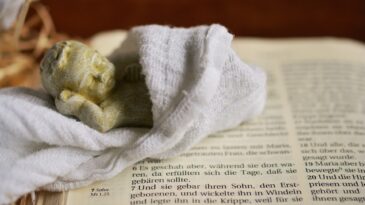
New Year's Reflections: Luke 2:22-40
I have often thought how nice it would be, how much more inclusive we would be, if some year we cast Anna and Simeon in the Christmas pageant along with all the children. Simeon and Anna remind us, with the kind of wisdom and eloquence that come with age, that even though the focus of Christmas is a child, Christmas is not only for children.
For after choruses of angels have lit up the night sky, and shepherds have scurried across fields of promise to see this thing that has happened, the magi have arrived bearing gifts from the nations, these senior adults enter the story when life is getting back to normal for the holy family. From the posture of long years waiting, they reveal to us how large and awesome this tiny baby really is.
Luke presents this chapter of the infancy narrative in the whispers and hushed tones of people who know how to make room for a baby, and of those who understand that their own future is somehow embraced by the child they behold. "Long ago," the Letter to the Hebrews begins, "God spoke to our ancestors in many and various ways by the prophets, but in these last days God has spoken to us by a Son." Somehow Simeon and Anna seem to know instinctively that the presentation of this baby in the Temple is God speaking. This child is the very Word of God whose tiny hands hold out salvation for the world.
Editor's Note: Presbyterian Church U.S.A. Moderator Rick Ufford-Chase and Ed Brogan, Director of the Presbyterian Council for Chaplains and Military Personnel, are planning a meeting in Miami, Fla., January 6 - 7, 2006 on the issue of the use of torture by the United States.
We are inviting concerned people of faith to gather in Miami for a time of spiritual renewal in an age of violence, a public witness and worship on the beach that will call on our leaders to live up to the most noble of our country's ideals, and a strategy session about how we might encourage a grass-roots movement of Presbyterians to stand unequivocally against the use of torture by our government and to name the ideals that might lead us to authentic security.
We are asking Presbyterians to pray, study and take action to assure that there will be no unjust and abusive treatment of detainees by the United States and its allies. This statement is an extension of a quickly growing grassroots effort to educate people about the use of torture and the urgent need to call for an immediate end of these practices, wherever they occur.
There is now clear and compelling evidence that the U.S. government has routinely turned to torture as an appropriate tool in the "War on Terror." As I have traveled this year, I have asked Presbyterians to think carefully about the growing level of violence (torture, militarized borders, security checkpoints, and the War against Iraq) that our government has employed on our behalf in its earnest quest for security in a time of violence. I have insisted, and continue to insist, that this is a deeply theological challenge. As Christians, we know that genuine security is found only in Jesus Christ, whom we discover as we read and re-read Scripture while we seek to live Christ's example in the world around us.
Of all the scandals that beset us as Americans, there is one that history is likely to judge most harshly, namely, the official authorization of torture abuse by the current Bush administration. As the Abu Ghraib photos have shown with unforgettable horror, serious violations of international law have followed in its train.
Let us be clear that torture is not just one issue among others. It is a profound assault on the dignity of the human person as created by God. It is therefore inherently evil. It violates a person's body, and terrorizes his mind, in order to destroy his will. The strongest of presumptions stands against it -- not only legally and morally, but also, from a religious point of view, spiritually. At the same time, authorizing torture poses a direct threat to constitutional government. As Columbia law professor Jeremy Waldron has urged, the issue of torture is "archetypal." It goes to the very heart of our civilization. Whether torture is permitted or prohibited is a question that separates tyranny and barbarism from the rule of law.
"Power corrupts. Absolute power corrupts absolutely." Clichés are clichés, and truisms are truisms. But Lord Acton's most famous cliché posits enough truth to cause any thinking American to tremble with fear.
When the Berlin Wall fell in 1989, most westerners rejoiced. This symbol of Soviet totalitarianism had crumbled, and freedom was singing a new song. However, a handful of those rejoicing also began to tremble. They asked, "What will become of America if it remains the lone superpower in the world? Will she muster sufficient character and courage to contain the corrosive effects of unchecked power in this new world?"
When the earlier Bush government felt compelled to send troops to Kuwait to defend its ally against the Iraqi invasion there, it achieved its basic goals. The military withdrew, encouraging the hope of other nations that we would not over-assert our power.
Then 911 happened. The appearance of invulnerability was shattered. Americans were taken hostage by fear of further attacks. Ends now could justify means, that is, if the ends in view included the preservation of American's freedoms. And what of those means? What about a second invasion of Iraq driven by a complicated mix of incomplete espionage regarding alleged weapons of mass destruction over there, alongside a hunger for justice (vengeance?) over here. Would dubious ends justify the means of a new war? What should we do with the resulting prisoners of war? Could we extract information from them that might avert more terror-caused carnage?
Lately I feel like a stranger in the United States.
I am a remnant of what has been called "the greatest generation," but it's not the thinning ranks of my generation that has me feeling lost and confused. It's the debate about torture that has been swirling around me for months. I never imagined such a debate in my country.
A single statement from the executive branch that torture is forbidden everyplace, all the time, by every agency and under all circumstances, would stop all such talk immediately. There might be an element of danger in that stance, but virtue knows any sacrifice is worth a better future. We need to end the torture debate so the world will know that my country would never become as the enemy.
My father fought in World War I in Europe. He was a quiet man who never talked about his service in France, but my mother's photo of him in his uniform is etched in the minds of his children.
When World War II broke out, we were five boys and a little sister. The three oldest enlisted within days of the declaration of war. As number four, I enlisted as soon as my 18th birthday rolled around. Three of us went into the Army Air Force for pilot training; one joined the 5th Armored Division.
My youngest brother, Dudley, graduated from high school a couple of years later. Dad and Mom did not stand in the way of his enlisting, although they could have gotten a deferment for him to help on the farm. Dud didn't want cold, mud and tents, so he joined the Navy.
When his orders came to report for duty, what was left of the family climbed into the car and took him to the train station -- his grandfather, a great aunt, his little sister and parents. They all returned to our home to stay overnight. Dad went immediately to the end of the backyard and dug up the basketball standard that had stood for many years over a dusty plot where running feet had trampled out every living thing. It was too painful to see it standing there, silent and unused. After supper and evening visiting, Mom and Dad turned their bed over to company. They took the boys' room; Mom crawled into Dud's lower bunk, and Dad climbed into the top one. Finally, in the dark, alone, Mom was able to shed the tears that she had held back all day. Dad heard her crying and climbed down. They slept wrapped in each other's arms in Dud's empty, single bed. Mom wrote later, "When the morning came, our courage returned."

His answer, in his own words: The Spirit of the Lord is upon me, because he has anointed me to bring good..
Richard II, son of Edward the Black Prince, was king of England from 1377 to 1399. According to his biographer, Anthony Steel (his note 23), Richard was the inventor of the pocket handkerchief, which is a very absorbing subject. I admit that a pocket handkerchief can get snotty, but only if you get too nosy. During Richard's reign, the power behind the throne was John of Ghent whose name was corrupted to Gaunt.

There is power - and then, there is power. There is the power that comes with military supremacy and another kind of..
© Copyright 2026 The Presbyterian Outlook. All Rights Reserved. Privacy Statement. Website by Web Publisher PRO