


Ten is a good round number. There are lots of lists of 10. After spending more than 40 years in the field of Christian education in the Presbyterian Church (U.S.A.), I would like to share 10 things I have learned about Christian educators.
Who are the educators? They are the DCEs, pastors, certified educators, graduates with majors in Christian education, part-time staff and volunteers. They are the ones who see Christian education as a high calling of service, to equip the saints for ministry, to build up the body of Christ.
Many people today are wondering what the future holds for the Presbyterian Church (U.S.A.). Our differences seem to be getting bigger rather than smaller. Our denomination is one that is seeking unity. But, so far, real unity has eluded us. Trying to achieve unity is like chasing the wind (Ecclesiastes 2:14). The harder we try to attain it, the more it slips through our fingers. What is it that will bring us together?
Two deleterious movements began after the celebratory march down Peachtree Avenue in Atlanta following the reunion vote in 1983. Groups began to move in different directions and factionalism took on new life. Second, the predecessor denominations’ commitment to racial integration and interest in economic justice were moved off center stage and replaced by issues associated with human sexuality.
The views expressed in this article are my own, not those of the Task Force on Peace, Unity and Purity on which I serve. In successive editorials, Outlook editor Robert Bullock voices high hopes for the task force. His expression of confidence in the task force and his offer of prayers are most welcome.
An eagerness for peace lies at the heart of five overtures to the 214th General Assembly meeting this summer, each having to do with the denomination’s process for amending the Book of Order.
Olympia Presbytery sounds the concern plainly. As a rationale for proposing that the General Assembly vote on amendments to the Book of Order only every fifth year, Olympia writes, "The Presbyterian Church (U.S.A.) has been in a constant battle over divisive constitutional issues for years and years and years."
Teaching at a theological seminary has its fun moments, but it is mostly the serious business of trying to provide survival skills for the leadership of the church. Presbyterians especially obey Our Lord's command to worship God with the mind (Mk 12:30; Mt 22:37; Lk 10:27). Obviously we need first-rate institutions to nurture first-rate ministry. I am truly grateful for my quarter century on a seminary faculty and the importance of the subjects I teach.
People who think outside the box threaten to become invisible. They do not fit within the conventional categories. In our situation, theological and political liberalism are usually linked. Theological and political conservatism are also linked. Few find this situation odd, even though a case could be made that, properly, theological liberalism tends toward political conservatism, and theological conservatism toward political liberalism.
In our church we are constitutionally committed to a high view of the authority of Holy Scripture. This commitment reflects not only the Reformed tradition, but also (as ought not to be overlooked) the broad consensus of the entire ecumenical church. Although there are still significant differences in the ecumenical church about how to think in accord with Scripture, the day is long since gone when Reformation churches could assume that only they are the custodians of binding scriptural authority.
From its earliest period the ecumenical church has recognized that some forms of life are incompatible with faith in the gospel. Baptism meant not only being incorporated into the church as the body of Christ, but also breaking decisively with the ways of the world. Certain worldly occupations — like prostitution, acting in the salacious dramas of the theater and military service — were regarded as impermissible, especially in the first three centuries. Certain practices, moreover — like incest, drunkenness and the abuse of worldly power — were cause for at least provisional excommunication. Bishops, presbyters and deacons, as officers in the church, were expected especially to live lives worthy of the gospel.
I start with a basic intuition. Whenever a long and protracted debate rages in the church, chances are that it cannot be resolved because significant truth actually exists on both sides. In such cases neither side can discern the truth represented by its opponents. Nor can either accommodate the truth important to the other within its own, highly polarized modes of thought. Only by thinking outside the box can the controversy be resolved.
When the General Assembly appointed a task force to explore what ails the church, the task force members decided to call their group the "Peace, Unity and Purity Task Force." These simple words have been in our ordination rubrics for decades: "Do you promise to further the póó, uóó and póó of the church?" Any minister and almost all officers can fill in the blanks. And yet, those three little words ensnare us in controversy when the going gets rough in the church. As it is now.
Common sense tells us that you canít have it all. A sign in a farm equipment dealerís repair shop states: "We do three types of jobs — Cheap, Quick and Good. You can have any two. A good quick job — wonít be cheap; a good job cheap — wonít be quick; a cheap job quick — wonít be good."
A Statement of Conscience
Respectfully submitted to the Presbytery of Yellowstone
By the Session of 1st Presbyterian Church
Anaconda, Montana
March 4, 2002
We, the Session of 1st Presbyterian Church of Anaconda, Montana, after careful study and prayerful reflection, respectfully inform the Presbytery of Yellowstone that we cannot in good conscience comply with any interpretation of Book of Order provision G-6.0106b that restricts the rights of governing bodies to discern the will of Christ in choosing leaders. Therefore, we declare:
In democratic America every person is supposed to be equal to every other person. However, in spite of this quondam theory, a lot of people regard themselves as superior not equal. They prefer to be leaders rather than followers. This is a perfectly understandable desire because on a sled run, only the lead dog gets to look at the scenery. All the other dogs are looking at something else. In fact, what the other dogs see and what they do can both be described as a "running behind."
The church is constituted — i.e., is brought into being — by its participation in the reality of what God has done in Jesus Christ. This reality is embodied and proclaimed in the narrative of God for us, Christ with us and the Spirit among us. It is this reality — this dynamic story of God’s engagement to be our God — to which the Scriptures, as the Word of God written, bear witness.
The National Board of More Light Presbyterians recognizes with regret that Amendment A has been defeated. We are profoundly grateful for the 29 presbyteries and overture advocates, the Ordination Standards committee and the 212th General Assembly that sent Amendment A by a margin of 60 percent to all of our presbyteries for discernment and consideration.
With the vote of South Louisiana Presbytery on Feb. 19, the Presbyterian Church (U.S.A.) has obtained the simple majority needed for the defeat of Amendment A, maintaining the "fidelity/chastity" provisions regarding ordination standards in the Book of Order. Should the current voting patterns continue in the presbyteries remaining to vote, where the pro-gay proposal is being rejected by a two-to-one margin, the defeat will signal the strongest affirmation to date on the part of the vast majority of Presbyterians in preserving the biblical witness to marriage between a man and a woman, and in upholding those standards for ordained leadership. This is an encouraging sign of renewal.
With unofficial results showing that a majority of presbyteries have
rejected proposed Amendment 01-A, the Covenant Network of Presbyterians
released the following statement:
With the Presbyterian Church (U.S.A.) seeking a way forward in these times of theological and political conflict, some have suggested a "third way," and now The Presbyterian Outlook has urged a "third force." Presbyterians for Renewal believes what is really needed is a recommitment to the Third Person of the Trinity.
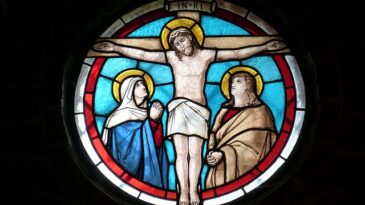
Formerly a United Methodist minister, I am now Presbyterian. Methodists don't use the line, "He descended into Hell" as part of the Apostles' Creed. It was always hidden in the footnotes, a part of the traditional creed, something no longer used. In the Presbyterian Church (U.S.A.), people affirm their faith as a community, in response to hearing the Word of God.
As the writer of all but two words of the "Affirmation of the Lordship of Christ" that was adopted by the 213th General Assembly (2001), I want to thank the Office of Theology and Worship for their statement, "Hope in the Lord Jesus Christ." The statement is longer and more fully developed than the short affirmation by the Assembly, but the two declarations are in complete harmony.
Over the last 10 years, we have seen an increasing incidence of candidates for the ministry and ministers transferring from one presbytery to another using functional language such as "Creator, Sustainer and Redeemer" to refer to the Trinity. This avoids using the personal language of "Father, Son and Holy Spirit."
All Christians are called upon to confess the Lordship of Jesus Christ. As Presbyterians we make this confession guided by what our church has stood for through the ages. For Presbyterian Church leaders in particular, this guidance is embodied in the literature collected in our Book of Confessions. As ordained leaders we vow to
sincerely receive and adopt the essential tenets of the Reformed faith as expressed in the confessions of our church as authentic and reliable expositions of what Scripture leads us to believe and do.
All of us who are or have been pastors know what it is like to be in the middle of a marital or family counseling session and realize that what the parties are arguing about isn’t really the issue. They may be talking (or yelling) about a child’s grades, but the problem for the family lies elsewhere. The grades are merely what they’ve decided to argue about.
Jesus said, "I am the way, the truth and the life. No one comes to the Father but by me." Some Presbyterians argue that we must take these words to mean that since Jesus is the only way to salvation, Christianity is the only true religion. Therefore any genuinely two-way conversation between Christians and followers of other religious traditions inevitably compromise true Christian faith and leads to religious and ethical relativism.
© Copyright 2026 The Presbyterian Outlook. All Rights Reserved. Privacy Statement. Website by Web Publisher PRO