Advertisement

Gospel music, singers highlighted at Grammys


(RNS) Gospel singer CeCe Winans added two more trophies to her collection Feb. 8 at the 48th Annual Grammy Awards. The Detroit-born artist earned awards for best contemporary soul gospel album for "Purified," her seventh solo album, and best gospel performance for the album's first single, "Pray."

Gladys Knight and the Saints Unified Voices choir earned best gospel choir or chorus album for "One Voice."

Other gospel category winners included:


-- Best Gospel Song: "Be Blessed" by Yolanda Adams, James Harris III,

Terry Lewis & James Q. Wright


-- Best Rock Gospel Album: "Until My Heart Caves In" by Audio Adrenaline


-- Best Pop/Contemporary Gospel Album: "Lifesong" by Casting Crowns


-- Best Southern, Country or Bluegrass Gospel Album: "Rock of Ages,

Hymns & Faith" by Amy Grant


-- Best Traditional Soul Gospel Album: "Psalms Hymns & Spiritual Songs" by Donnie McClurkin


The show featured several performances by gospel artists, including the Hezekiah Walker & Love Fellowship Choir, who sang with Mariah Carey; Robert Randolph, who lent his guitar prowess to Aerosmith in a tribute to Sly Stone; and Yolanda Adams, who sang during the show's finale in a tribute to New Orleans.

Irish rock band U2 swept up five Grammys. U2 lead singer Bono, an international advocate for the poor, spoke at the National Prayer Breakfast in Washington Feb. 2.

Overtures reveal major issues for GA action in Birmingham

Skimming the early batches of overtures submitted to the 2006 General Assembly is sort of like watching a one-minute highlights show of the controversies of the Presbyterian Church (USA).

Divestiture.

Gay ordination.

Churches withholding per capita.

Non-geographic presbyteries.

The Theological Task Force.

It's all there -- and more, in the first opportunity the church has had in two years to ask the assembly to take a stand.

But these overtures also reflect a real desire that the PC(USA) be a light of hope to a hurting world -- that it be a denomination not afraid to wade in to troubled waters in places like Haiti and the Democratic Republic of Congo.

So far, more than 60 overtures have been formally submitted, with more surely on the way. Here's some of what lies ahead.


The changing faces of American Presbyterianism (1706-2006), Part 1

Editor's note: Three hundred years ago this year, the first presbytery was organized in what became the United States of America. This article is the first in a series exploring the historical overview of the Presbyterian presence in our country


Three hundred years. That's how long it has been since the first presbytery was organized by Francis Makemie (c. 1658-1708). Has anything remained the same through the years?

When reflecting on major changes in Presbyterian faith and life in America over the centuries, my thoughts focus immediately on my own ancestry. The first James Smylie landed on the Carolina Coast in the very early years of the eighteenth century. Over time these Smylies multiplied and gradually found their way to and settled in Mississippi Territory. I am descended from a John Smylie, brother of another James who made history, not the best kind of history. He wrote a pro-slavery tract in the 1830s which some contemporaries considered the "first shot" of the Civil War. Migrants from the British Isles, in the Smylies' case from Scotland and Northern Ireland, began to flow across the Atlantic in the latter part of the seventeenth and early eighteenth centuries. They faced the challenges of settlement up and down the eastern seacoast. Clergyman and entrepreneur Francis Makemie (c.1658-1708) helped us adjust. In his A Plain and Friendly Persuasive . . . for Promoting Towns and Cohabitation (1705) he urged migrants to move, in this case, to the west and south, in order to establish towns, churches, schools, and businesses. He even suggested that people in the new world might become strong enough one day to separate from the mother country -- although he did not encourage it. 

He recommended putting drunks, or "sots," in stocks until they behaved. Makemie argued with the Anglican authorities, and won the right to settle and build churches. In 1706 he organized the first presbytery in Philadelphia and began raising up "meeting houses" (dissenters could not use the term church in some places, a term reserved for Anglicans). He prepared ministers to pastor the wave after wave of immigrants who flowed into the colonies.  After some debate, members of the church agreed to an Adopting Act (1729) in which they embraced the Westminster Confession and Catechisms as being "in all essential and necessary articles, good forms of sound words and systems of Christian Doctrine," leaving the Presbytery the right to settle disagreements over interpretation of the documents. 

Something old, something new?

Wouldn't it be great to be able to go back to the good ol' days?

Many a Presbyterian totes around a mental sketchbook filled with scenes depicting how the church ought to be. Its pastel pictures strikingly resemble how the church used to be, that is, how we remember it used to be.

A quick comparison to the church of today produces piqued exasperation. The soft pastels have been overwhelmed by glaring, clashing neons. The view has changed and not for the better.

We know we can't blame the church for the accelerated pace of living and for the startling turns in the road. As warned over 35 years ago by Alvin Toffler, Future Shock is our world. However, when we gather with the household of God, we expect to find at least an hour's respite. We want to sense a certain steadiness, a reassurance that "God's in his heaven; all's right with the world." Instead, the church provides disruptions and disturbances not conceived in those good ol' days,   

Can't we turn down the conflict? Can't we reclaim the way it used to be? Can't we go back to those good ol' days?

Then again, when are those good ol' days?

https://www.flickr.com/photos/johnragai/16579788935/

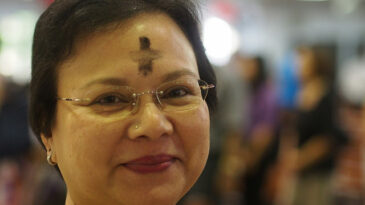
Ash Wednesday in miniature

Are you one of those miniatures collectors? Do you know any one who is?  Back in the days when printing presses would utilize little blocks of wood and metal, with forms of each letter with which they would lay out the type for their newspaper or an advertisement, they would put those letters in printers' boxes. That's how they sorted their  As from their Bs, Cs, and so forth.

Today, the letter blocks are long gone, but the printers' trays still sell.  You find them in antiques stores and flea markets. They get scooped up by collectors--miniatures collectors. They provide just the right sized cubby holes in which to display tiny cars, tables, chairs, dishes, figurines, and other decorative items that are less than a square inch in size.

Why? What's the value of having unusable tiny imitations of the real thing?

An international team of psychologists is studying this phenomenon, in the hope that an answer to this mystery could lead to solving countless other unanswered mysteries. All kidding aside, one part of the answer may be that collecting small items affords persons the opportunity to get their arms around their world, or literally, get their hands around it. When you look at miniatures, you get to see things more completely. You get a grip--literally--on life.

That may be one of the reasons that so many people have been so taken with the movie "The Passion of the Christ"--which broke attendance records almost everywhere that it has was released--including Egypt, Syria, and Lebanon.  In just two hours and six minutes, that movie gave people a handle on Jesus. Frankly, it exposes the horrors of violence and evil that thrive in human hearts, but in the process, that movie also provides us a picture of the sacrificial suffering of Jesus.

Belhar Confession: Does it speak To PC(USA)’s challenges?

During the Sunday morning coffee hour, the Confession of Belhar probably isn't at the top of the conversation list.

It's not in the Book of Confessions of the Presbyterian Church (U.S.A), so lots of Presbyterians have probably never read it.

But this confession -- adopted in 1986 in South Africa during the heart of the struggle over apartheid -- is beginning to draw renewed interest among Reformed Christians in the United States and internationally. South African churches have been urging the rest of the world to read it for years, saying it has a message Christians need to hear.

For while it was written in a particular time and place, its themes are unity, reconciliation and justice -- exactly, some contend, the issues confronting American churches in the 21st century.

So some are starting to pay closer attention to Belhar.

At Union Theological Seminary-Presbyterian School of Christian Education in Richmond, this year's Sprunt Lectures are being given by H. Russel Botman and Dirk J. Smit, two South African theologians who were involved in writing the Belhar Confession.

In 2004, the PC(USA) General Assembly, responding to a task force studying the issue of reparations, commended the Belhar Confession to the church for study and reflection. It's been posted on the PC(USA) Web site https://www.pcusa.org/theologyandworship/confession/belhar.pdf , where Joseph Small of the Office of Theology and Worship says it's receiving a respectable number of hits. (The complete text is available here in this Outlook issue.) Some study materials on Belhar should be ready for the church by this summer's assembly in Birmingham, Small said.

And in the Reformed Church in America, which began a study of the Belhar Confession in 2000, grassroots support is building to make Belhar an official confession of the RCA, according to Douglas W. Fromm, a pastor from Ridgewood, N.J., who also is the RCA's associate for ecumenical relations.

If that happens, that would mark the first time in the denomination's history the RCA had added a confession to the three sixteenth-century confessions it already claims (those being the Heidelberg Catechism, the Belgic Confession and The Canons of the Synod of Dort).

Internationally, the Belhar Confession is making an impact too.

Behind Belhar: South African theologians lecture on context, concepts of Confession

A denomination dealing with questions of diversity, theology, and culture in a country with ongoing divisions of race, economics, and social norms. Today's Presbyterian Church (U.S.A.)? No, Reformed churches in the South Africa of the 1980s.

The time and situation out of which the Belhar Confession was born were evoked during the annual Sprunt Lectures at Union Theological Seminary/ PSCE in Richmond, Va., January 23-25. Speakers included two of the originators of the confession: H. Russel Botman, professor of missiology and vice rector of the theology faculty of Stellenbosch University in Matieland, South Africa; and Dirk J. Smit, professor of systematic theology on the theology faculty at Stellenbosch University. Both Botman and Smit relate to the Uniting Reformed Church in Southern Africa. They lectured on the theme, "Not Our Own: Being Christian in Difficult Times."

The Belhar Confession is being distributed and discussed in PC(USA) circles as possibly informational and inspirational as the church struggles with current issues and efforts such as the Task Force on Peace, Unity, and Purity of the Church as a way to address them.

Both Smit and Botman said the Confession was written quickly and without much pre-planning as their Synod struggled with a World Alliance of Reformed Churches report coming from the recently-held Ottawa conference in 1982. They realized "we had been debating church unity for thirty, forty years; it was no longer a moment for theological debate. The truth of the gospel was at stake," said Smit. Synod representatives including Botman and Smit prepared the draft Belhar Confession in a day or so; it was sent to the churches for four years of scrutiny and discussion before being finally adopted in 1986. The two reformed groups that adopted the Confession have merged into what is now known as the Uniting Reformed Church in Southern Africa.

A kairos moment?

It's one thing to obey God. It's another thing to obey God. Or to put it in the words of H. Russel Botman, "In retrospect we learned to decipher a difference between 'simple obedience' and 'complex obedience.'"  

Botman was speaking, along with colleague Dirk Smit, at the Sprunt Lectures at Union/PSCE in Richmond, outlining how the theological work of forming and adopting the Belhar Confession had helped his country find its way out of the practice of apartheid.  South Africa will never be the same, thanks to these two men and their colleagues who shared the task of writing Belhar--and thanks to the courage of their people who pursued a path of "complex obedience."

What's that? As in most other situations, the text carries with it a subtext. The text here is the Confession of Belhar, a potent application of Christian theology and ethics to the church's life in secular society. The subtext is another document, the Kairos Document, which emerged in the days that intervened between Belhar's composition and adoption.  

True to their denomination's policies, Belhar was proposed at a general synod meeting (1982), but it needed to be studied for four years before it could be adopted by the next synod meeting.  Three years into that process, the Kairos Document was published as "an attempt to develop ... an alternative biblical and theological model that will in turn lead to forms of activity that will make a real difference to the future of our country." Kairos was an uncompromising, prophetic call to action.  

Kairos lamented that, "the Church is divided. ... Even within the same denomination there are in fact two Churches. In the life and death conflict between different social forces that has come to a head in South Africa today, there are Christians (or at least people who profess to be Christians) on both sides of the conflict--and some who are trying to sit on the fence!" Specifically, the document outlines three competing kinds of theology in the church: "'State Theology,' 'Church Theology,' and 'Prophetic Theology.'"

Why Belhar? Why now?

Martin Luther reminded us we live in a world "with devils filled that threaten to undo us." This line from his hymn, A Mighty Fortress is Our God, is a powerful image of the forces that seek to pull us apart. In our church, in our nation and around the world, hostilities and hatreds thrive and the peace and unity for which we yearn seem far away.

Does the church have a word to speak into this racial and political strife? In many times of crisis, the church has borne witness to the life-giving power of the gospel in living that takes up the cross of Christ. It has also borne witness in its confessions. One of those confessions has come to us from the suffering experienced by those in the Dutch Reformed Mission Church during the time of apartheid in South Africa -- the Belhar Confession.

So, before answering the questions why Belhar and why now, it might be better to first ask, "What is Belhar?" In response to the oppression of apartheid in South Africa, the Dutch Reformed Mission Church proposed this confession of the Christian faith in a synodical meeting in the town of Belhar in 1982 and adopted it in 1986. It was not only a stance against the injustices of apartheid, it also provided a theological rationale for a way forward in its aftermath. The process of the Truth and Reconciliation Commission in South Africa, which focused on restorative justice rather than punishment, owes much of its motive power to the Belhar Confession.

There is now, in the Presbyterian Church (U.S.A.) and in the larger church, a renewed interest in the Belhar Confession. The Reformed Church in America, one of our Formula of Agreement partner churches, is currently considering whether it should be included among their confessional documents.

Is the “Big Lie” no big deal?

It's official. Fibbing is OK if it serves a higher purpose. Oprah said so.*

The queen of all media tossed this ethical grenade recently when she called CNN's Larry King to defend his guest, James Frey, author of mega-best-seller A Million Little Pieces. Frey's memoir of addiction and recovery was featured on the "Oprah Winfrey Show" when it was anointed the October selection of the world's most powerful book club.

The champagne went flat in January when The Smoking Gun, a Web site devoted to investigative reporting, posted a damning story with the tantalizing tagline "The Man Who Conned Oprah." What followed was an old-school piece of "gotcha!" journalism that showed how Frey had embellished and, in some cases, fabricated significant events in the account of his life. Frey admitted to King he had taken dramatic license but said he stood by "the essential truth" of his life. As King was about to sign off, Winfrey phoned to say the report outing Frey was "much ado about nothing."

What mattered, Winfrey said, was that millions of people struggling with their own monkey-on-the-back habits had read Frey's book and felt better. In a nation addicted to feeling good, she implied, swallowing a little pill of deception is a small price to pay.

Winfrey's take on lying is not new -- Machiavelli said it first when he wrote, "the end justifies the means," the greatest rationalization for bad acts ever -- and it appears plenty of Americans agree.

Confession of Belhar

This is a translation of the original Afrikaans text of the confession as it was adopted by the synod of the Dutch Reformed Mission Church in South Africa in 1986. In 1994 the Dutch Reformed Mission Church and the Dutch Reformed Church in Africa united to form the Uniting Reformed Church in Southern Africa (URCSA). This inclusive language text was prepared by the Office of Theology and Worship, Presbyterian Church (USA).

A Good Woman

Three things are too wonderful for me; four I do not understand: the way of an eagle in the sky, the way of a serpent on a rock, the way of a ship on the high seas, and the way of a man with a maiden. (Proverbs 30: 18-19)


There's a decided disadvantage to making a movie of a play. It's probably going to look "staged"--lots of conversation, lots of character interaction, plot development through dialogue, but it all feels confined to tight quarters. There are a couple of decided advantages, though, of converting a successful play into a movie: the snappy repartee is already audience-tested, and the ending is going to feel like a finale.

"A Good Woman" is based on Oscar Wilde's 1892 play, "Lady Windermere's Fan." There's a mature kind of jocularity here, as if it's the older folks who are funny, intelligent, and wise, and the younger folks are physically handsome, but tend to be victimized by their own immaturity, ardor, and impulsiveness. But, of course, there's no fool like an old fool, and the young have to be prevented from being impaled by their own principles.

“What do you know about Presbyterian missionaries?”

Many of our congregations support missionaries at home and abroad with financial contributions and prayers but how much concrete information do members and officers have about the men and women who serve the church so faithfully? Certainly we can discover more by reading the Mission Yearbook for Prayer and Study 2006 every day (PDS 70-612-06-450, $8.50.) The companion book, 2006 Children's Mission Yearbook for Prayer and Study (ISBN 1-57153-057-6, $ 5.50), is handsomely illustrated and is a great tool to teach elementary and junior high youth about the importance and excitement of mission. To learn about current missionaries on the field, the 2005 Directed Mission Support Guide (PDS, 800-524-2612, Item 68700 05-050) lists the missionaries and the countries they serve. A list of new workers for 2006 is available at the same address.

For those who have never had the opportunity to meet a mission worker personally or have not worked on a mission project, a new book provides an inspirational and invigorating glimpse into the life of  courageous members who give up so much to proclaim Christ and work to bring healing and justice to other nations.  Christ's Globe Trotter, The Legacy of Edward (Ted) Pollock (Franklin, TN: Providene House Publishers, 2005) was writen by Ted Pollock and Beverly Reeve. It chronicles six decades of Ted's breathtaking service with his wife Dolly, his children, grandchildren, fellow church members (he is active in First Presbyterian Church, Pittsford, NY), and friends from all over the world.

Those who have been fortunate enough to travel with Ted ( I went on church rebuilding trips to Ethiopia and Mozambique) know him to be a man of indefatigable energy and determination.  Even though he is in his nineties he can run most younger men and women into the ground. His enthusiasm about God's work is so high-powered that people meeting him for the first time worry that he might hyperventilate as he describes it.

The Gospel According to Oprah

For those who are skeptical and dismissive of Oprah Winfrey, it is particularly challenging not to be condescending of a religious book that seeks to evaluate Oprah and her influence on our society. In The Gospel According to Oprah, Marcia Z. Nelson provides us with a thorough theological evaluation of Oprah and her empire that invites us to re-evaluate this "pop-icon," and possibly learn and appropriate lessons from her. 

Oprah's influence is unparalleled. Her show is broadcast in 108 countries around the globe, from Afghanistan to Zimbabwe; she claims 10 million viewers in the U.S. alone; her magazine has 2.7 million readers. Her empire includes movie production, Internet, and product endorsement. Her core message, "improve yourself, make a difference, and learn from life's lessons," is consistent and strong throughout all areas of her work. 

In the Reformed tradition, we believe that any dichotomy between sacred and secular is a false one. We claim that God is actively involved in all spheres of life: church and culture, pastor and pop-icon. How is it that we might see Oprah as an instrument of God? It is hard to dismiss Oprah's generosity: more than $175 million donated to causes and organizations that promote human development. The testimony of countless people who claim to be living more full lives because of Oprah is equally compelling. Oprah has raised consciousness about critical social issues such as child abuse.

Donor pledges $1 million to Cameroon seminary

(PNS) Mary Lee Dayton, wife of the late Wally Dayton -- president of Dayton Development Company (Dayton department stores) -- has pledged $1 million to the Mission Initiative: Joining Hearts and Hands (MIJHH) to support the Presbyterian Theological Seminary of Cameroon, Africa.

Her gift was announced Jan. 22 during worship at Westminster Church in Minneapolis, Minn., where she is a member and where her father, the late Arnold Lowe, served as pastor. Her gift, which establishes a permanent endowment for the seminary through the Presbyterian Church (U.S.A.) Foundation, also represents an early commitment to the congregation's 150th anniversary campaign, slated for 2007.

WMD committee recommends new relief-development agency idea; full GAC discussion Feb. 11

LOUISVILLE -- They want to take the leap.

The Worldwide Ministries Division committee of the General Assembly Council has recommended that the Presbyterian Church (U.S.A.) set up a new charitable corporation to do relief and development work -- an effort to make the church's response to disasters more agile and to give potential donors the accountability, visibility and ease of use they expect.

That's a controversial plan -- and one that may provide some fireworks when the full council discusses it Feb. 11.

Some fear it will take away from the PC(USA)'s attempts to build a strong fund-raising structure to benefit the whole church. Some -- aware that the denomination needs to cut its budget again this spring and that layoffs are imminent -- suspect that some programs are being built up and protected at the possible expense of others.

Some say it's too much change with not enough time to figure out what's the best way to go.

But Susan Ryan, director of Presbyterian Disaster Assistance, put it this way.

"There are enormous opportunities in this new time for us. We'll either be a visionary church or not."

GAC votes Friday morning to restructure, downsize

LOUISVILLE  -- Smaller, leaner, more focused on the big picture.

That's the hope for the General Assembly Council of the Presbyterian Church (U.S.A.) in the years ahead -- as the council voted on Feb. 10 to restructure itself and downsize from 71 members to 48.

Before voting, council members asked plenty of questions -- among them, how the changes would affect the council's relationship with other groups in the church. Some of those groups have sent "corresponding members" to General Assembly Council meetings; the council has also assigned some of its members to be liaisons to these groups.

The council did amend the restructuring proposal from its Governance Task Force to continue to give the Committee on the Office of the General Assembly "corresponding member" status on the council -- which means that a COGA representative will continue to have voice at the council meetings, but not a vote.

Those losing corresponding member status on the council are: the Board of Pensions, the Presbyterian Foundation, the Presbyterian Investment and Loan Program and the Presbyterian Publishing Corporation.

The council also made a few other changes in the task force's proposal. The number of young adult representatives (considered to be someone 18 to 35 years old) increased from three to four. The number of presbytery executives was raised from two to three and the number of synod executives from one to two -- an effort to intensify the sense of connection between the national church and the grass roots. Two council members would have to be persons with disabilities.

Mission Work Plan, new executive director selection process discussed

LOUISVILLE -- A search committee looking for a new executive director for the General Assembly Council of the Presbyterian Church (U.S.A.) hopes to have a candidate to nominate by May -- about a month before the General Assembly gets to work in Birmingham in June.

The General Assembly Council's executive committee is asking that the council gather for a special meeting in Chicago on May 23 to consider nominating to the assembly whoever is picked as the top candidate. John Detterick, the council's current executive director, intends to retire this summer to New Mexico.

On the executive committee, there was some discussion about whether to have the extra meeting in May, because of the expense -- estimated at around $40,000 -- and because the council already has a meeting scheduled in Louisville at the end of April.

But Detterick told the executive committee that it's "critically important" for all of the council members to meet in person the candidate being considered, because "you're selecting your head of staff for the next four years."

Karen Dimon, a council member from DeWitt, N.Y., who heads the search team effort, said a search firm has been hired and applications are coming in. Dimon said the search committee won't be ready to propose a candidate at the council's April 26-29 meeting. And "it's too important a decision to make by conference call," she said, so that's why an extra meeting is being requested.

In many ways, the council is at a crossroads -- with a new executive director on the horizon, with more budget cuts anticipated this spring, with major reports being considered on how the council is structured and how it focuses its work.

Seed, Easley elected GAC officers

LOUISVILLE -- The General Assembly Council has elected new leadership.

Allison Krahling Seed, a pastor from Lee's Summit, Mo., is the council's new chair. And Charles F. Easley Sr. of Atlanta was chosen vice-chair.

Seed, the pastor of Trinity Church in Independence, Mo. for more than a decade and a former moderator of Heartland presbytery, is currently chair of the council's National Ministries Division Committee.

In a statement to the council explaining her candidacy, Seed wrote: "I am unapologetically Presbyterian," and said she's daunted by neither change nor controversy.

Paper on human sexuality presented to Task Force

ATLANTA -- The Presbyterian Church (U.S.A.) knows how to vote on gay ordination. It has lots of experience at that -- so much so that General Assembly veterans joke they can guess the speeches that folks are lined up at the microphones prepared to deliver.

But William Stacy Johnson, a lawyer and professor of systematic theology at Princeton Theological Seminary, wants to shift the discussion, and wants the PC(USA) to find a way to talk about gays and lesbians--their lives and commitments and faith--in a way that's theological, in the context of their relationship with God and with other Christians.

He's proposing that the church consider gays and lesbians in the context of what he calls the "Trinitarian drama" -- through the bold, amazing, ongoing story of creation, reconciliation and redemption.

 At the most recent meeting of the Theological Task Force on the Peace, Unity and Purity of the PC(USA), Johnson presented a long draft of a paper on human sexuality that he's written and which the task force, while not formally adopting it, intends to add to its list of resources for the church.

 The paper -- this draft is 140 pages -- is an extension and revision of an earlier one Johnson presented to the task force in August 2004, in which he described six ways in which Christians have thought theologically about homosexuality -- views ranging from affirmation to condemnation. In this new, expanded paper, Johnson describes seven views, encouraging people to think of them as sort of a "survey" of some of the literature and thinking that have informed the church's debate on gay ordination.

$2.5 million gift to Union/PSCE

Jeannette Early of Dallas, Texas, has made a $2.5 million gift to Union Theological Seminary and Presbyterian School of Christian Education in Richmond, Va. It is the largest contribution the seminary has ever received from an individual.

The gift will launch the renovation of the former library on the seminary campus to become an advanced center for teaching, learning, and worship.

In gratitude, Union-PSCE will designate the building as the Allen and Jeannette Early Center for Christian Education and Worship. Mrs. Early made the gift through a family foundation. Her husband, Allen, died in 1979. She is a 1937 graduate of the Presbyterian School of Christian Education (now Union-PSCE).

"The school means so very much to me, it gives me joy to think about students who will study in this building for generations to come. I am very grateful to the Lord who blessed us so much that we could be generous to Union-PSCE," she says.

A woman’s “Where else?”

"If we leave the PC(USA), where are we going to go?" The troubled question came from an evangelical woman, a young leader and emerging scholar in conservative circles. At issue was the possibility of a split in the denomination, likely to be led by disaffected conservatives. "We know where the women stand in the PCA [Presbyterian Church in America]," she said. "The EPC [Evangelical Presbyterian Church] said women's ordination is optional, and they've opted to 'just say no.'" Then came the clincher. Referring to the testosterone-driven conference she and I were attending, she added, "Frankly, I hear these men saying they will do things differently, but I don't know if I can trust them."

How tragic it would be if, in the midst of a grand two-year celebration of women's ordination in the PC(USA), a long-threatened split occurred that would launch another denomination where women's leadership role could possibly be diminished. 

What celebration? Well, one hundred years ago (1906) a woman was first ordained a deacon in the UPCNA. Seventy-five years ago (1930) a woman was first ordained a ruling elder in the PCUSA. Fifty years ago (1956), the first woman was ordained a minister of word and sacrament. This convergence of anniversaries makes 2006 a fitting time to celebrate the ways we Presbyterians have promoted gender equality in a century long to be remembered for Women's Suffrage, gender-inclusive language, and The Feminine Mystique.

The ordination of women

I had just a short time with Courtney, a six-year-old girl who helped me clean up after church school. In a quick fifteen minutes, I needed to finish the job and put on my preaching robe to lead the worship service. I made small talk with her as we gathered the magazine pages and put the glue sticks away. Her parents did not attend the rural church in South Louisiana, but she visited regularly with a friend. I did not know her well, so I was in the middle of asking her those generic grown-up questions. I finished inquiring about her favorite subject in school and moved on to, "Courtney, what do you want to do when you grow up?" I expected the same answers that I usually hear: an astronaut, a ballerina or a teacher.

Courtney stopped. A smile began in the corner of her mouth that told me she was bursting with the news. "I want to be...um. I want to do what you do. I want to be a pastor."

"You do?" My excitement brimmed so that I was the one bursting. We stood in a tiny classroom in a country church, but it felt like Courtney and I had passed by a huge milestone and changed history. It caused me to look back to see the long stretch behind us and made me resolve to finish the road ahead. 

I grew up in the seventies, when little girls were told that they could do anything. I clearly remember when I was Courtney's age and my grade school teacher informed me that I could become the president of the United States, if I wanted to. But I did not want to be president; I, like Courtney, wanted to be in the ministry. Of course, during that time women struggled to have it all and I saw glass ceilings shatter every day in boardrooms, on the Supreme Court, and in Congress. Yet I had never seen a woman pastor before, so I could not conceive of leading a congregation. I did not know that it was an option.  

Women Ministers (1955-1966) and Margaret Towner

In October, 1955, fifty plus years ago, the United Presbyterian Church in the U.S.A voted in General Assembly to ordain women to the Ministry of Word and Sacrament. In 1956, the Cayuga-Syracuse Presbytery in New York ordained Margaret Towner, the first women clergyman of the denomination. In 1965, the Hanover Presbytery in Virginia ordained Rachel Henderlite the first woman to be so recognized in the Presbyterian Church in the U.S. These ordinations marked a climax in the history of Presbyterians among whom the role of women in the church had been growing for well over a century. Lois A. Boyd and R. Douglas Brackenridge* told this story in Presbyterian Women in America, Two Centuries of a Quest for Status (1983) published by the Presbyterian Historical Society.  On the fiftieth anniversary of the extension of this ordination right to women it is appropriate to recall the women's progress in the life of Presbyterians.  

Over the centuries in our male-dominated country, women have been identified and treated in different ways in both society and the church. Early on they were considered mostly "ornamental," as it was put. But males could not do without females. In those early days, a woman named Mary Wollstonecraft published the explosive A Vindication of the Rights of Women (1772), printed in Philadelphia shortly before Americans had adopted a Declaration of Independence in 1776. A Presbyterian woman (turned Unitarian), Elizabeth Cady Stanton, helped write the "Declaration of Sentiments" (1848) based on 1776 male-oriented document. Stanton published The Woman's Bible (1895) in which she and other women celebrated the noted females whose contributions may be found throughout the Scriptures.

In August 1920, Presbyterian President Woodrow Wilson signed into existence the XIX Amendment to the Constitution of the United States granting women the right to vote. At the same time women were gaining ground in public matters, they gained ground in ecclesiastical affairs. In the nineteenth century they had started women's organizations apart from males. Women became deeply involved in the support of and participation in educational endeavors such as Sunday Schools, home and foreign mission work. They formed their own societies to further causes that interested them.

Moreover, because of the "unrest" in the churches, the PCUSA granted the right of women to serve as "brother deacons" (as they were called) in 1922-1923, and "brother elders" in 1930. Ruling elder and mission executive, Robert E. Speer, together with Katherine Bennet and Margaret Hodge, played important roles in this movement in the PCUSA, demonstrating a kind of "de facto" equality in the process. Later on Eugene Caron Blake led the movement in the General Assembly to ordain women as ministers of "Word and Sacrament."

Enter Margaret E. Towner. Towner, a New Yorker, left a career as medical photographer at the Mayo Clinic to study education at Syracuse University prior to assuming the call of Christian education at the East Genesee (N.Y.) Church. Towner then pursued the three-year Bachelor of Divinity Degree at Union Theological Seminary in New York. She believed such training would be helpful to her in Christian Education. And she flourished as Christian Educator in Allentown, Pa.

Political agenda, threats spoiled realm of marshmallows and ‘Kum Ba Yah’

Special to The Tampa Tribune, used by permission


Editor's note: Derek Maul, a Presbyterian free-lance writer who has written for the Presbyterian News Service and Presbyterians Today magazine, wrote this piece shortly after a church camp supported by Peace River and Tampa Bay presbyteries was forced by threats of violence to cancel a leadership event for Muslim youth (see news story on page 6.)  -- Jerry L. Van Marter, coordinator of Presbyterian News Service.

TAMPA, FLA. -- (PNS) My friends run a church camp. You remember church camp? Campfires, marshmallows, best friends, starlit nights. "Kum Ba Yah," holding hands, cookouts, rain every day.

Church camp. You know, the place that's all about people coming together, prayer, hugs, surmounting barriers, spiritual breakthroughs, learning to listen to God. It's about as far away from politics as you can get. Or at least it should be.

Last week my friends had their lives and their children threatened and their patriotism questioned. They had to close the church camp and take their children to a safe place. They had to make other arrangements for a group of -- this is ironic -- international students, visitors from overseas celebrating Christmas and learning about America.

So why did my friends and their guests have to leave in such a hurry? Because their safety and their lives were threatened by Americans who wanted to carry a political agenda into the realm of marshmallows and "Kum Ba Yah."

Page 829 of 882
Advertisement