

How are we supposed to love our enemies (as Jesus tells us) and live in a just society?

A poem about beginnings and endings, and finding hope in unexpected places.

When it comes to being a bi-vocational pastor in the PC(USA), Julie Raffety shares her experience of what works and what expectations need adjusting.
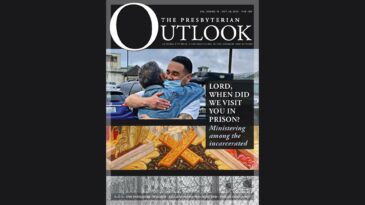
“Do you know the United States is the only country in the world that sends children to adult prisons to die?”

We invite you to help with this effort!
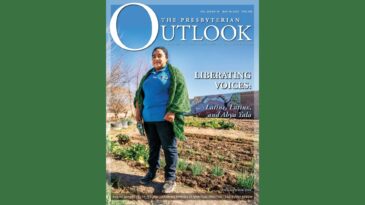
"This issue of the Outlook centers Latinx voices to help us attend to alternative perspectives in this borderland season of our liturgical year. ... Who are we in this in-between space? What role does our faith play here?"
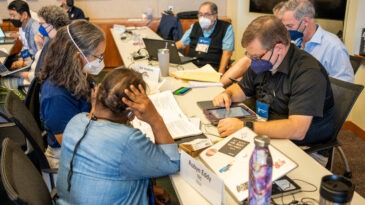
General Assembly Committee on Ecumenical and Interreligious Relations (GACEIR) explains the "Statement Denouncing Antisemitism and Islamophobia" passed by the 225th General Assembly.

"The subliminal messages of prison say: You are defined by your worst mistake. ... It is Hagar’s Community Church’s goal to communicate: You are so much more ... You belong to God."
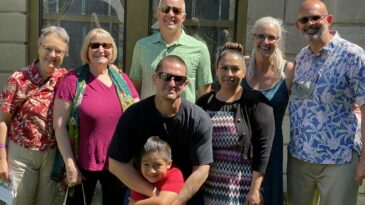
Teri McDowell Ott interviews church members about their experience of faithful connections with incarcerated persons.

"I met two of my greatest teachers/ in prison."

A poem by Scott Barton on Luke 20:27–38.

Charles D. Myers invites Christians to put aside differences and think in a "more excellent way" (1 Corinthians 12:31), claiming faith and truth, justice and inclusion, love and compassion in a united voice.
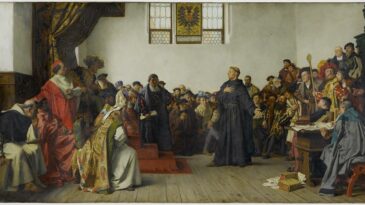
Dawn DeVries writes that the lives of Martin Luther, John Calvin and John Knox remain relevant.

"Seeds were sown by my ancestors and countless others so one day I would carry their spirit of grace and healing into prison. Intergenerational incarceration is a reality. So is intergenerational healing."
Rachel Young reflects on her friendship with Catherine, a trans woman whose life invites her to know Christ in a new way.

A poem by Scott Barton on Habakkuk 1:1–4, 2:1–4.
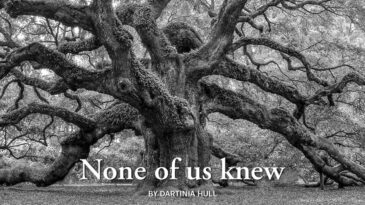
Dartinia Hull’s story of abuse, murder and her grandmother’s efforts to educate those caught in the school-to-prison pipeline.
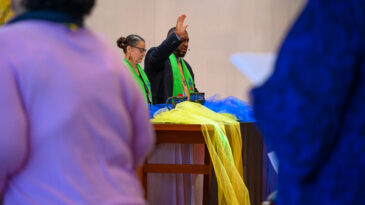
Timothy B. Cargal, who helps to oversee the development of new pastors for the Presbyterian Church (U.S.A.), outlines the basic process for becoming a minister of Word and Sacrament.
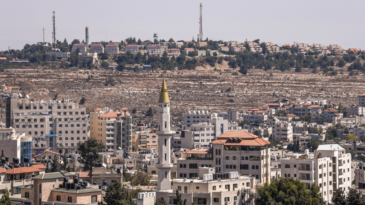
While the Jewish community in the U.S. is largely disappointed or outraged by the use of the word apartheid, responses within the denomination are generally positive.

Aaron Neff, who grew up in a religiously fundamental environment, shares how studying the Bible taught him to stop using it as a weapon against LGBTQIA+ folx.
Word and sacrament are central to the church, but they need to point us outward rather than inward, says Chip Hardwick.
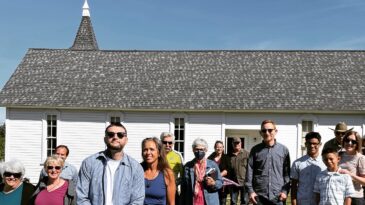
Chris Hoke describes the genesis of a program creating relationships between releasing prisoners and churches.

When churches focus solely on growth, they are asking the wrong questions, Graham Standish writes. What if, instead, we focus on experiencing God?
"Meeting the incarcerated men, sharing conversation and learning with them was a transformative and liberating experience for me. ... Mass incarceration became more than an issue I studied, and criminal justice reform more than a need for which I advocated."

Adrian White reflects on a sacred gathering at Montreat.
© Copyright 2026 The Presbyterian Outlook. All Rights Reserved. Privacy Statement. Website by Web Publisher PRO