
Constitution committee rejects call for special study of Olympia Overture amendments
Rather than create a special committee to study recent inclusion amendments, commissioners pointed to related proposals already before the assembly.


Rather than create a special committee to study recent inclusion amendments, commissioners pointed to related proposals already before the assembly.

Majority favors stepping away from such companies by 2030.

Approvals included a vote reversal on a controversial ordination exam alternative.
Commissioners recommend a 17-member task force to investigate the decisions that closed World Mission while also advancing a new process for reimagining the denomination's global mission.

World Mission’s closure fueled calls for stronger oversight as commissioners approved a heavily amended governance plan for the unified agency.

A recommendation shaped by discussions at the National Queer Presbyterian Gathering would let candidates see congregations’ openness to LGBTQIA+ leaders.
The Gender and Sexuality Justice Committee approved a two-pronged approach: better understanding the scope of misconduct and strengthening support for survivors.

We've rounded up the best spots to eat, drink and explore in Milwaukee.

Drawing on his experience serving a congregation after a pastor's sexual misconduct, Joel Moody argues that CON-06 would establish clearer expectations for restoration, strengthen accountability and ensure survivors' voices are heard.

As GA227 experiments with a new gathering space, Greg Allen-Pickett considers what the Town Square might reveal about connection, community and the future of in-person assemblies.
The first day of committee meetings focused largely on the denomination's new agency structure, while commissioners also advanced full-communion discussions and considered changes to investment policy.

The Committee on Theological Education and Ordination approves seven overtures.
As GA considers CON-10, David W. Congdon argues that neither Scripture nor Reformed theology requires monogamy and that God's abundant love offers a foundation for affirming polyamorous relationships.
As GA227 considers CON-10, Alexander Haines argues that marriage's exclusive covenantal bond reflects God's faithfulness to the church and should remain the standard for Presbyterian ministers.

Phil Gladden reflects on Jesus’ “easy yoke,” exploring how Christ’s call to discipleship offers rest, freedom and grace on July 4th weekend.
GA227 committees meet online June 22-24.
You are welcome to use this liturgy in your online worship services and distribute it to your congregation.
Brian Ellison argues that CON-04 would reopen settled constitutional questions, create confusion in the church, and undermine recent progress toward LGBTQIA+ inclusion.
Following the passage of Amendments 24-A and 24-C, Wesley Pak calls for GA227 to adopt CON-04, ensuring that inclusion and freedom of conscience remain held together in the life of the church.
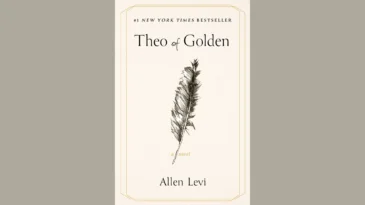
Andrew Taylor-Troutman reflects on Allen Levi’s "Theo of Golden," a novel that reveals God’s love, grace, and the beauty of the divine image in the worn and ordinary faces around us.

What happens when we truly listen to one another’s stories? Teri McDowell Ott considers how storytelling can dissolve barriers, challenge assumptions, and create space for transformation.
The committee will also consider an overture on studying innovative and collaborative approaches to ministry.
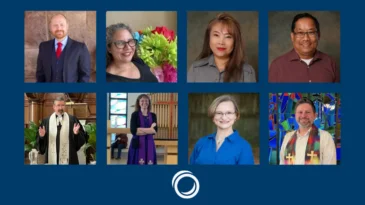
The four teams standing for election at GA227 discussed mission, church unity, Christian nationalism and the future of the denomination during a Presbyterian Outlook webinar.
Columbia Theological Seminary has completed a significant organizational realignment designed to support sustainability, effectiveness and service.
Overtures for consideration by the Reformed Identity Around the World Committee span nuclear weapons policy, Middle East conflict, Korean reconciliation and Syrian religious freedom.
© Copyright 2026 The Presbyterian Outlook. All Rights Reserved. Privacy Statement. Website by Web Publisher PRO