


The meditation for Lent IV on Jesus' healing of the blind man in John's gospel effectively opens the central question before our beleaguered, cacophonous church. The PC (USA) is in an identity crisis. Publications and websites put forward by numerous associations claim to know the truth and to have the truth, and the truths are as different as night and day. Such stubborn knowing (seeing) is appropriately called into question by Chris Chakoian's meditation.
It set me thinking about how our eyes are opened, and how we learn to see. In John's story, learning to see is costly for the man healed, for his community of faith -- and even for the disciples. It is not, pun intended, a pretty picture. The healing provokes judgment as well as grace, for the light, which in John is never extinguished by the darkness of the cosmos, reveals as well as it enlightens.
The year was 1965, the Second Vatican Council’s “Decree on Ecumenism” had readjusted the ecumenical landscape, and the Roman Catholic Church was thrust headlong into an ecumenical movement that had been a largely Protestant and Orthodox enterprise.
“Jesus began to weep.”
This man does not do this often.
This is the only time that the gospels record Jesus’ weeping. Something has struck the deepest chords in Jesus. This is a resurrection story, but Jesus is weeping. What do the tears mean?
It’s easy to bash the Pharisees in the gospel of John, but we do so at our peril. One writer notes, “For the Pharisees, protecting the identity of the Jewish people in the midst of a hostile world was an overwhelming priority. To continue to be ‘God’s people’ meant that they had to use every tool they had to remain distinctive, to resist the temptation to assimilate into the dominant culture.” [1]
THE SEVEN LAST WORDS FROM THE CROSS. By Fleming Rutledge. Eerdmans. 2005. $12.00. 91p. (0-8028-2786-1). Pb.
Rutledge presents seven meditations on the final sayings of Jesus. He links the sayings from the cross with contemporary events and concerns, incorporating recent biblical scholarship and modern questions about the death of Christ.
Editor’s Note: After the OUTLOOK guest opinion “What have we done for Brown?”, Nibs Stroupe, pastor of Oakhurst Church in Decatur, Ga. responded with the following letter. His letter in turn sparked a reply by Ken Woodley, author of the original opinion piece. Both letter and response add to the information about this chapter in civil rights history in the United States.
Rarely has a film captured my attention as did Hotel Rwanda. I recommended it to the congregation this past Sunday (1/30/05), something I've not done previously, and even declared that it should be required viewing in every school and college, beginning with Middle School. Hotel has no gratuitous violence or language. It is based on a true story, and those who wrote and directed it are to be commended, not only for making an excellent, suspenseful film, but also for bringing public attention in a mass market to the horrors of continuing genocide. In three months Hutus massacred 800,000 Tutsis, a horror that began immediately after a peace accord signed under the watchful eyes of Western powers. The Rwandan government, in the hands of a Hutu general following the president's flight into exile, did nothing to prevent the slaughter.
Third Sunday in Lent
A man and a woman meet at a well. They talk. Their heads bend toward each other. Her head jerks back in astonishment. He leans forward to explain. With a sweep of an arm he gestures for her to leave, and she drops her head to say something.
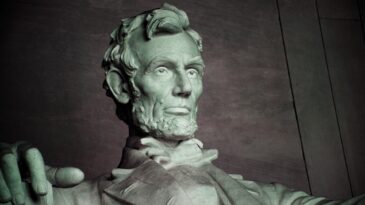
On Presidents' Day and just after the inauguration of President George W. Bush, we might do well to remember the inspiring words of one of our most important leaders. He presided over the country during the Civil War of the 1860s: Kentucky-born Abraham Lincoln. In a letter to a Kentuckian in 1855, Lincoln, then a leading politician in the Illinois legislature, put the crisis of the Republic in these memorable words:
You are not a friend to slavery in the abstract. In that speech you spoke of "the peaceful extinction of slavery," and used other expressions indicating your belief that the thing was at some time to have an end. Since then we have had thirtysix years of experience; and this experience has demonstrated, I think, that there is no peaceful extinction of slavery in prospect for us. ... On the question of liberty as a principle, we are not what we have been. When we were the political slaves of King George, and wanted to be free, we called the maxim that "all men are created equal" a self-evident truth, but now when we have grown fat, and have lost all dread of being slaves ourselves, we have become so greedy to be masters that we call the same maxim "a self-evident lie". ... Our political problem now is, "Can we as a nation continue together permanently---forever--half slave and half free?" The problem is too mighty for me--may God, in his mercy, superintend the solution.
Good advice is readily available on almost every topic. But when it comes to our church I am not so sure.
Some speak to us in hearty voices assuring us that all is well. Others are more strident, drumming their cadences out as though calling us into a campaign. And some speak so quietly that it is almost impossible to tell if they have something to say at all.
One of the quietest voices is that of a relatively obscure Benedictine monk named Adalbert de Vogüé. He lives in the abbey of La Pierre-que-vive, and he has thought about The Rule of Benedict for nearly fifty years. He has really thought about it, not quite in the same way that we have thought about the Westminster Confession of Faith. First hearing it read aloud daily as a novice, once in Latin and then later in French, he has become as adapt at listening to it as a doctor with his stethoscope upon a bared chest.
Several years ago, an article in the PRESBYTERIAN OUTLOOK described how the Rev. James Smith, a Presbyterian pastor in Springfield, Ill., played a key role in converting Abraham Lincoln out of his original skepticism toward a greater confidence in Biblical faith.
Reflections on Romans 4:1-5, 13-17, Second Sunday in Lent
The Epistle reading for Lent 2 is Paul’s most extended discussion of Abraham. Paul points to Abraham to illustrate his doctrine of justification by grace through faith. The faith of Abraham is witnessed in his trust in the promise of God. (4:20).

I walked down Grace Street in Richmond twenty years ago, and about two blocks away from St. Paul's Episcopal Church I began to see people with dirty foreheads: all sorts of people, some smartly dressed for work on their lunch hour, some rather shopworn and tired. It wasn't until hours later that I realized that the source of the "dirt" was Ash Wednesday worship, so distant was this day in the liturgical calendar from my Presbyterian experience. Now Presbyterian churches galore, including our own, have Ash Wednesday worship. We ministers smudge the foreheads of worshipers and say: "Remember that you are dust, and to dust you shall return."

Presbyterians have begun to reclaim the tradition of Ash Wednesday, using it as a way to focus on our mortality and prepare us for Easter.
Reflections on Matthew 4:1-9, First Sunday in Lent
I am haunted by the story of the temptation of Jesus in the wilderness. So was the Russian novelist, Fyodor Dostoyevsky. Early in his novel, The Brothers Karamazov, Ivan tells Alyosha of a poem he has written he calls "The Grand Inquisitor." In the prose/poem Jesus returns to earth in human form, but it is not to Nazareth in Galilee. It is to Seville in Spain in the midst of the Spanish Inquisition of the 16th century.
Lent 1: Genesis 2:15-3:7
Prayer after reading of the garden’s Keeper
Maker:
for gardens and walls;
for Eden and our homes to the east;
for your talk with us and ours with you;
The water that overwhelmed Indonesia, Sri Lanka, parts of India and Thailand, and killed thousands of people caught the attention of the world. The immensity of the tragedy was difficult to comprehend. The power and strength and force of the water were overwhelming.
What have people been saying about God and the Indian Ocean tsunami? I have seen quite a few “Why did you let this happen, God?” articles, from both inside and outside the church. There is, of course, nothing wrong with such pieces: such accusatory questions have precedent, even in the Scriptures. To ask this question of God in a time like this is not an impiety, but an understandable longing to see more clearly in the often-murky pool that is human existence.
We may look at the contributions of Shirley Guthrie to the Presbyterian Church, to the church catholic, to his students and colleagues, and to his family and friends from many angles. In the appreciative articles honoring him and his work, the Outlook, with the advice of his colleagues at Columbia Seminary, has represented those angles of approach to this profound thinker and teacher of great simplicity, who by God's grace (he would most certainly say) had a beneficent and transforming effect upon multitudes. Wherever his students preach and teach, Shirley's influence is spread to people in the pews, who themselves begin their own theological reflection -- even if they are shy to call it that.
Those of us who entered seminary in the latter years of Shirley Guthrie’s career are grateful that this teacher never relinquished his passion for sharing his gift with the church. Already a professor emeritus by the time I entered Columbia Theological Seminary, Shirley gave little evidence that he had laid aside his calling to instruct. Indeed, his beloved wife Vivian knew that, in many ways, the seminary classroom was his first home.
In the fall of 1963, I entered Columbia Theological Seminary right after finishing Presbyterian College. Professor Felix Gear’s favorite phrase for us new students, “theological tadpoles,” was a compliment in my case. Shirley Guthrie took me under his wing as he did for the other 100 new “tadpoles” who wanted to learn what it means to be a Reformed theologian.
Professor Edward Dowey occasionally remarked that Karl Barth’s theology “is a secret known only to God and a few seminary professors.” Dowey attributed the comment to Leonard Trinterud, who, along with Dowey, served on the committee that wrote The Confession of 1967, and in part the comment may reflect the resistance they both encountered in the church to the Barthian perspective in the confession.
Shirley Guthrie was, in my opinion, one of the great theologians produced by American Presbyterianism. He did not do the things that theologians often do to gain national and international fame. He did not, by saying things that had never been said before, found a “new school of theology” with its own distinctive label.
“He taught us how to live and how to die.”
Charles Cousar
In early summer 2004, it became apparent to family and friends that Shirley Guthrie was not feeling well. He was having some digestive problems and had limited his eating to soup and light food in the hope that this would be of help.
Harrowing images assail us; newspaper reports tell of mega death, miraculous rescue, fragile hope. The peoples of earth offer assistance to nations devastated by earthquake and wave. No one asks how such a thing could happen in a world created by God.
We live with the uneasy assurance of science that unstable tectonic plates produced an earthquake eight times more powerful than the explosion of a hydrogen bomb. Yet what do we say about the Creator of the rolling spheres, and of the roiling deadly seas.
Therefore we will not fear though the earth should change,
Though the mountains shake in the heart of the sea;
Though its waters roar and foam,
Though the mountains tremble with its tumult. (Psalm 46:2 -- 3)
© Copyright 2026 The Presbyterian Outlook. All Rights Reserved. Privacy Statement. Website by Web Publisher PRO